
Water in the Basement After Heavy Rain? Start Here
I’m Devin Orsi, owner of Peak Precision Contracting in Canonsburg. We’re a collective of tradespeople covering all aspects of renovations. Roof leak detection is my specialty, and water mitigation and mold remediation are part of what we do when a storm leaves water where it shouldn’t be.
If you walked downstairs after heavy rain and found water in the basement, start here. Don’t rip out drywall yet, and don’t assume it’s “just the foundation.” A few checks narrow the cause so we fix the right thing.
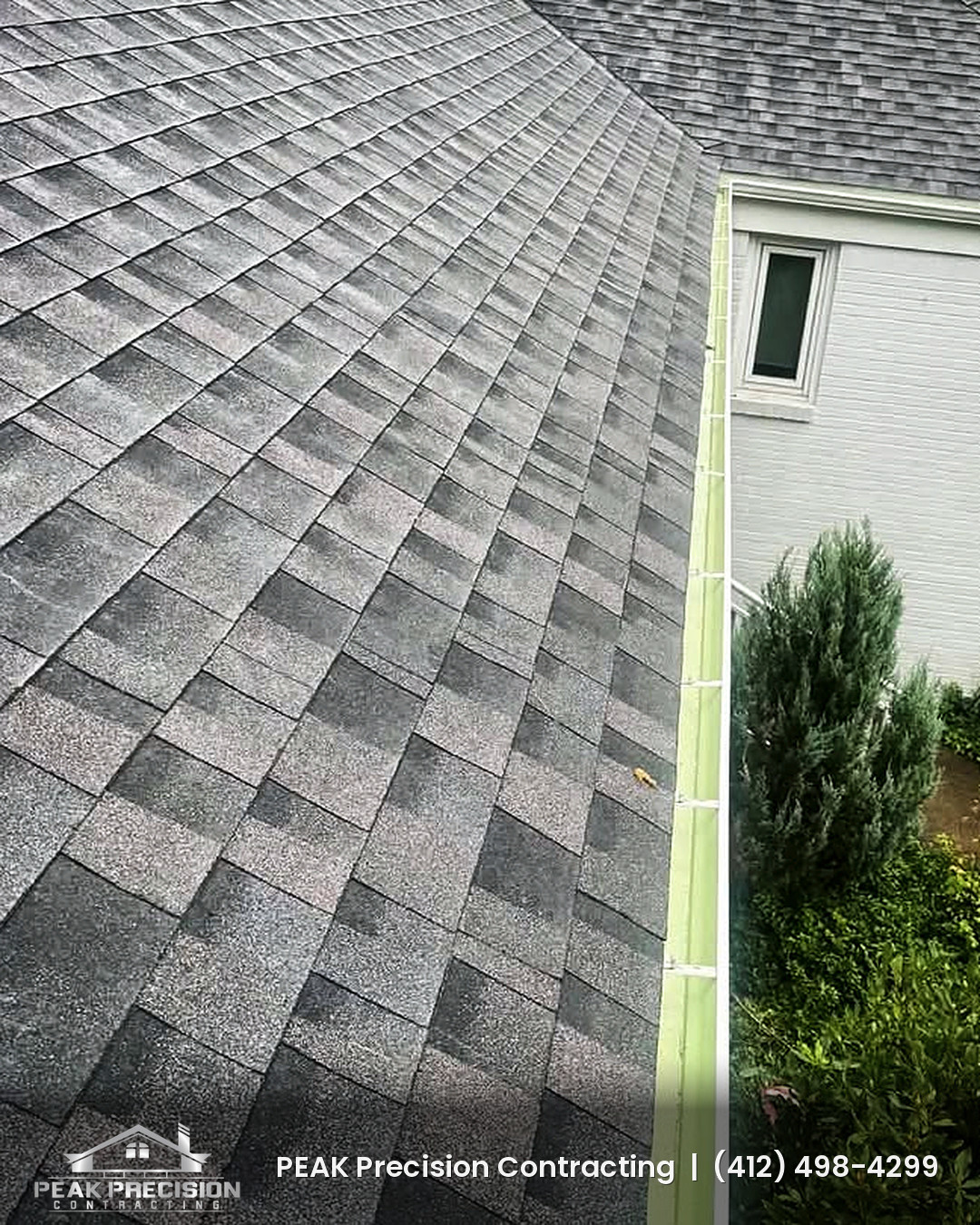
This guide is for homeowners in Canonsburg, Washington County, and the South Hills who want a clear next step before the next storm hits.
First: stay safe, then document
If water is near electrical panels, outlets, or appliances, keep clear and shut off power at the breaker only if you can do it safely from a dry area. If you’re not sure, wait for help.
Then take photos of:
- Where the water is entering or pooling
- How high it got (mark the wall if it’s still wet)
- The outside of the house on that same side: gutters, downspouts, grading, window wells
- Any ceiling or wall stains upstairs that showed up with the same storm
Those photos help on a free estimate and for a storm-damage insurance claim.
Three common paths water takes into a basement
After a hard rain around Canonsburg, basement water usually traces back to one of three paths.
1. Roof, gutters, and downspouts
When gutters overflow or downspouts dump at the foundation, soil saturates and water can show up as seepage along the basement wall or floor joint.
Clues: overflow stains on the fascia, downspouts that end right at the wall, clogged gutters after leaf-heavy weeks, or water that appears on the same wall as a short downspout. Gutters and roof edges are related work we handle often, and a problem upstairs can show up downstairs after the same storm.
2. Grading and surface drainage
If the yard slopes toward the house, or mulch and soil have built up over the years against the siding, rain has nowhere to go but toward the foundation. Window wells without covers or clear drains are another common entry point in older Washington County homes.
Clues: soggy ground against one wall after every storm, mulch higher than the weeps or siding, or a window well that holds water.
3. A roof or wall leak that travels
Not every wet basement starts at the footer. Wind-driven rain can get past flashing, siding, or a worn roof and travel down a wall cavity or chase until it shows up lower than you’d expect. That’s why roof leak detection matters even when the complaint is “basement water.”
Clues: stains on an upstairs ceiling or exterior wall on the same side, water that shows up hours after the rain stops, or a problem that only appears in wind-driven storms. Our roof repair in Canonsburg work often starts with tracing that path instead of guessing at the stain.
What you can check before we arrive
These are safe, simple checks while the ground is still wet:
- Look at the gutters during the next rain (from a window or doorway). Are they overflowing?
- Follow each downspout. Does water empty several feet from the foundation, or right against it?
- Walk the low side of the house. Does the soil slope away from the wall?
- Note which basement wall got wet and whether it lines up with a downspout, a window well, or a roof valley above.
- Check for new stains on ceilings or along exterior walls upstairs.
Skip digging, don’t open walls, and don’t run a shop vac near standing water if electricity is involved. The goal is information, not a DIY rebuild.
What we do on a water-after-storm visit
Peak Precision is a general contractor, not a one-trade shop. On these calls we look at the whole picture:
- Outside first. Roof edges, gutters, downspouts, grading, siding transitions, and window wells on the wet side of the house.
- Path tracing. Where water is entering versus where it’s pooling. Those are often different spots.
- Interior moisture. What’s wet, what needs drying, and whether mold risk is already in play so mitigation can start in the right order.
- A clear plan. Fix the source, then handle drying, repairs, and any finish work. Estimates are free. We won’t leave your doorstep until you’re satisfied.
Sometimes the fix is gutter and downspout work. Sometimes it’s grading. Sometimes it’s roof or flashing repair tied to siding. Sometimes it’s a combination, plus water mitigation so the basement can dry correctly. Related remodel work (kitchens, baths, flooring) waits until the moisture source is under control.
When to call sooner rather than later
Call after the storm if:
- Water came in for the first time, or worse than before
- You smell mustiness or see early mold on baseboards or drywall
- The same wall gets wet every heavy rain
- You’re seeing stains upstairs and water downstairs from the same storm
- You need documentation for an insurance claim
Waiting through “one more storm” often means a bigger dry-out. A free estimate now beats guessing.
Canonsburg, Washington County, and the South Hills
Homes around Canonsburg and the South Hills see mature trees that clog gutters, older foundations, tricky roof-to-wall ties, and yards that settled toward the house. Heavy rain doesn’t create those conditions. It reveals them.
If you’re in Canonsburg, Washington County, or nearby South Hills towns, start with photos and a call. We’ll tell you what we’re seeing and what should happen first.
Water in the basement FAQ
Is the estimate free?
Yes. Estimates are free. You’ll know what we recommend and what it covers before any work begins.
Do you only fix roofs?
No. Peak Precision is a full-service general contractor. Roof leak detection is my specialty, and we also handle gutters, siding, water mitigation, mold remediation, and the interior repairs that follow when water has been inside.
Should I run a dehumidifier right away?
If the area is safe and power is dry, reducing humidity helps. It doesn’t fix the entry point. Finding why the water got in still comes first.
Will you work with my insurance claim?
We regularly document storm-related damage and work with homeowners on claims. Bring your photos from the day of the storm.
What if it’s mold?
Mold follows moisture. We address the water source, then remediation and repairs in the right order so you’re not cleaning air while the wall is still getting wet.
Where are you located?
Peak Precision Contracting, 938 South Central Ave, Canonsburg, PA. We serve Canonsburg, Washington County, and the South Hills.
Ready to stop the next storm from doing this again?
If you’ve got water in the basement after heavy rain, call me at (412) 498-4299. Send photos if you have them. We’ll find the cause, stop it, and handle the drying and repairs that follow. Learn more on our Peak Precision homepage and our Canonsburg roof repair page, then let’s get your house ready for the next storm.
[…] Where water comes from outside. Gutters, downspouts, and grading around the house matter more than most people think. Water that dumps next to the foundation often ends up inside. We cover that in water in your basement after heavy rain. […]