
Water Heater Leak? Water Damage Steps for Washington, PA Homes
Most water heaters sit quietly in a basement corner or utility closet until the day they don’t. When a tank starts leaking in a Washington, PA home, the water usually spreads across a finished floor, wicks into drywall and soaks carpet before anyone notices. Here is what to do in the first hour, what homeowners insurance generally does and does not cover, and how to get the damaged rooms put back together.
Why water heater leaks matter more heading into winter
A tank-style water heater works hardest when incoming water is coldest, and that is the stretch of the year Washington County is heading into now. ENERGY STAR advises that if you suspect your water heater is more than 10 years old, it is time to consider replacing it before you are left with an emergency decision. It also notes that sediment build-up and unusual noises should be checked out, because ignoring them can lead to sudden failure and, in some cases, tank rupture and water damage to floors and carpets.
If you are not sure how old your unit is, the manufacture date is usually encoded in the serial number on the label. A licensed plumber can read it and tell you whether repair or replacement makes more sense.
What to do in the first hour
Once you see water around the base of the tank, work through these steps in order:
- Stay safe. Keep clear of standing water near outlets, extension cords or the heater’s electrical connections. If you are unsure, shut off power at the breaker before stepping into wet areas.
- Shut off the cold water supply to the heater. The valve is usually on the pipe entering the top of the tank.
- Turn off the energy source. For an electric unit, switch off its breaker. For a gas unit, set the control to the off or pilot position.
- Take photos and video of the tank, the leak point, and every wet area before you move or throw anything away.
- Remove standing water and move furniture, boxes and rugs out of the wet area.
- Call your insurance company to report the loss, and call a licensed plumber to repair or replace the heater.
Speed matters. The U.S. Environmental Protection Agency says it is important to dry water-damaged areas and items within 24 to 48 hours to prevent mold growth. Drywall, carpet pad and the bottom plates of finished basement walls can hold water long after the floor looks dry.
What homeowners insurance usually covers
Every policy is different, so your own policy language and your adjuster have the final word. In general terms, the Washington State Office of the Insurance Commissioner explains the split this way:
- Sudden and accidental water damage, such as a fixture or appliance that fails without warning, is often covered.
- Gradual leaks that continue over time are usually not covered, even if you had no way of knowing they started.
- Coverage can be denied if repairs are delayed after you discover the problem.
Two more points catch homeowners off guard. First, a standard policy usually pays for the damage the water caused, not for the worn-out water heater itself. Second, your deductible stays with you as the policyholder. We never offer to cover or waive a deductible, and you should be cautious of any contractor who does.
Good documentation helps any claim. Our guide on documenting damage for an insurance claim was written for storm losses, but the same photo, video and receipt habits apply to an interior water loss.
Does the replacement heater need a drain pan?
Pennsylvania’s Uniform Construction Code adopts the 2021 International Residential Code. Section P2801.6 of that code requires a storage tank-type water heater to sit in a pan wherever leakage from the tank would cause damage, such as above a finished floor. The pan must be at least 1.5 inches deep and drained by a pipe at least 3/4 inch in diameter. There is one exception for replacements: if a pan drain was not installed before, one is not required for a replacement water heater. Your plumber and your municipality’s code official can confirm what applies in your home.
Even when a drain is not required, a properly sized pan and an inexpensive leak alarm near the tank give you an early warning on the next leak.
Repairing the rooms after the water is gone
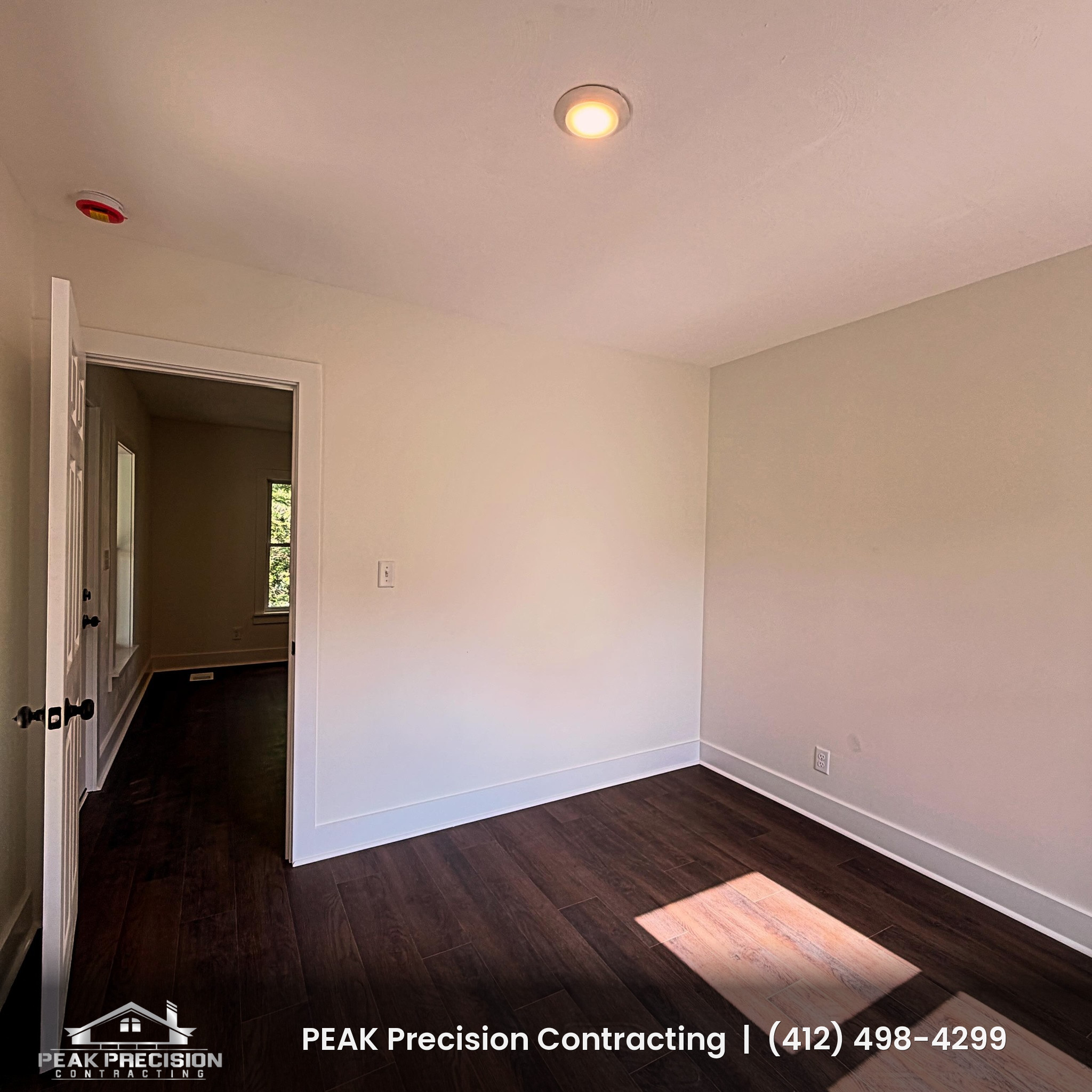
Once the plumber has the heater fixed or replaced and the area is dry, the rebuild starts. Depending on how far the water traveled, a typical scope can include:
- Removing and replacing wet drywall and insulation in finished basement walls
- Replacing flooring, underlayment and baseboard trim
- Repairing or rebuilding a utility closet, doors and casing
- Painting and finish work so the room matches the rest of the house
Peak Precision Contracting is a full team of tradespeople, so one general contractor can handle the drywall, flooring, trim and finish work instead of several separate trades. If the flooring needs replacing, our post on winter flooring installation covers what to expect from a cold-weather install. You can also visit our Canonsburg showroom by appointment to pick out flooring and finish samples and take them home to compare in your own light.
Our renovation services page shows the interior work our team handles across Washington County, and as insurance claim specialists we can document the damage, prepare a detailed scope for your adjuster and meet with them on site. Coverage decisions are always made by your insurer under your policy.
Water heaters are not the only winter water risk. Our guide to preventing frozen pipes before winter covers the other common cause of interior water damage this time of year.
Frequently asked questions
How long do tank water heaters last?
Many last around a decade or more, but age is only one factor. ENERGY STAR suggests considering replacement once a unit is more than 10 years old, before it fails on its own schedule.
Will insurance pay for my new water heater?
Usually not. Standard policies generally cover sudden water damage to the home, not the appliance that failed. Check your policy or ask your agent about any equipment breakdown coverage.
Can I wait to see whether the floor dries on its own?
It is risky. The EPA recommends drying water-damaged areas within 24 to 48 hours to prevent mold, and insurers may deny coverage for damage made worse by delay.
Do you replace water heaters?
The heater itself should be handled by a licensed plumber. Our team repairs the drywall, flooring, trim and finished spaces the water damaged.
Water damage repair in Washington, PA
If a water heater leak has damaged your floors, walls or finished basement, call Peak Precision Contracting at (412) 498-4299 for a no-obligation estimate. We are based at 938 South Central Ave in Canonsburg and serve Washington, Canonsburg, Peters Township, McMurray and the South Hills. Our work is backed by optional craftsmanship warranties up to 25 years, and we won’t leave your doorstep until you’re satisfied. PA HIC Registration #PA132469
Sources
- ENERGY STAR, When Should You Replace Your Water Heater?
- U.S. EPA, A Brief Guide to Mold, Moisture and Your Home
- Washington State Office of the Insurance Commissioner, Leaks, water damage, and mold
- 34 Pa. Code Section 403.27, Applicability of standards (adoption of the 2021 IRC)
- 2021 International Residential Code, Section P2801.6 Required Pan (via UpCodes)