
Fall Roof Inspection Checklist for Canonsburg Homeowners
I’m Devin Orsi, owner of Peak Precision Contracting in Canonsburg. We’re a family-owned general contractor, a collective of tradespeople who handle interior and exterior renovations, roofing, siding, gutters, windows, storm and insurance claims, water mitigation, and mold remediation. Roof leak detection is my specialty, and every fall I tell homeowners the same thing: the best time to find a roof problem is before the first freeze, not after the ceiling stains show up.
Western PA winters are hard on a roof. Freeze-thaw cycles, wind, heavy wet snow, and ice along the eaves all go after the weak spots. Here’s the fall roof inspection checklist I’d walk through on any home in Canonsburg and the South Hills, what you can safely check yourself, and when it’s time to have a pro look closer. Estimates are free.
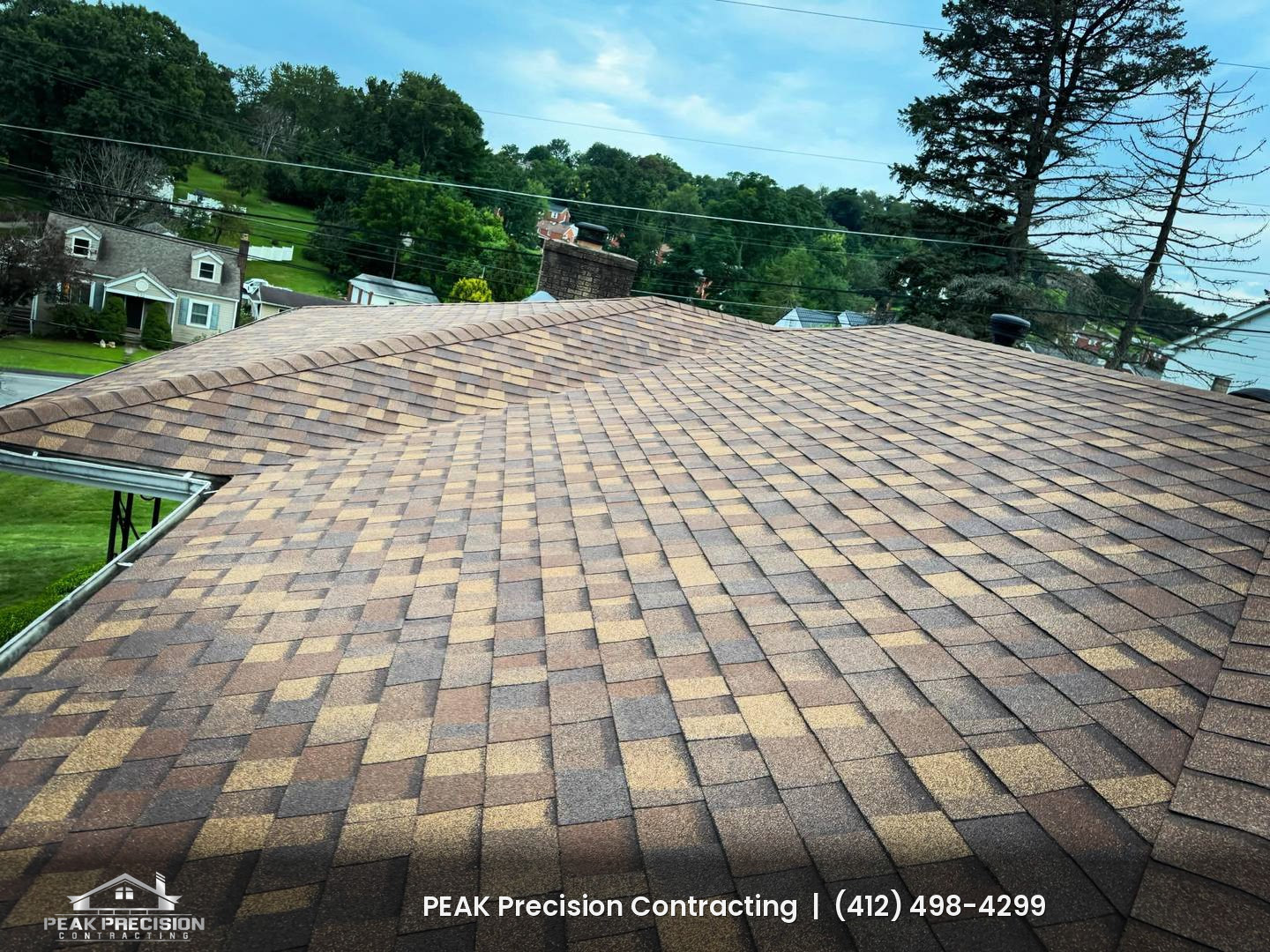
Why a fall roof inspection matters in Canonsburg
Small roof problems rarely stay small through a Pittsburgh-area winter. A lifted shingle lets wind get underneath. A cracked pipe boot lets water in a little at a time. Gutters packed with leaves back water up under the roof edge, and once it freezes, ice can hold it there. By spring, what could have been a simple repair can turn into rotted decking, wet insulation, and damaged drywall inside.
Fall gives you a window: the weather is still workable, materials can be installed properly, and you have time to plan a bigger project if the inspection shows your roof is near the end of its life.
Your fall roof inspection checklist: from the ground
You don’t need to climb a ladder to learn a lot about your roof. Walk around the house on a clear day, with binoculars if you have them, and look for:
- Missing, lifted, or creased shingles. Fall winds are a common cause. Our post on missing shingles after fall wind explains what to do next.
- Curling, cupping, or bare spots. Shingles that have lost a lot of granules or are curling at the edges are aging.
- Granules in the gutters or at the downspouts. Some granule loss is normal on a new roof, but heavy buildup on an older roof is a warning sign.
- Sagging lines. A ridge or roof plane that dips can point to a decking or structural problem and should be looked at quickly.
- Chimney condition. Look for cracked mortar, a damaged crown, or flashing that’s pulled away from the brick.
- Moss, algae, or overhanging branches. Branches that rub the roof wear shingles down and drop debris into the gutters.
Your checklist: gutters, flashing, and roof penetrations
A lot of the leaks I track down start at the edges and openings, not in the middle of the shingles:
- Gutters and downspouts. Make sure they’re clear, firmly attached, and draining away from the foundation. Here’s why it matters: clogged gutters before fall rain.
- Chimney flashing. This is one of the most common leak points on older homes. See chimney flashing leaks for the warning signs.
- Pipe boots and vents. The rubber collars around plumbing vents crack with age and sun. Read more on cracked pipe boot roof leaks.
- Fascia and soffit. Soft, stained, or peeling wood at the roof edge often means water is getting behind the gutters. Our guide to preventing fascia and soffit rot covers what to look for.
- Skylights and walls. Anywhere the roof meets a vertical wall or a skylight needs solid, sealed flashing.
Your checklist: inside the attic
If you can safely get into your attic, take a flashlight on a dry day and again after a rain:
- Water stains or dark spots on the underside of the roof deck, rafters, or around the chimney and vent pipes.
- Daylight showing through anywhere it shouldn’t.
- Damp or matted insulation.
- Frost, mildew, or a musty smell, which can point to a ventilation problem instead of a leak. Our post on roof leak or attic condensation explains how to tell the difference.
And don’t skip the rooms below: stains on ceilings, bubbling paint, or damp spots around upstairs windows are all worth noting.
What not to do yourself
Please stay off the roof. Steep pitches, wet leaves, and early frost make fall a dangerous time to walk a roof, and stepping in the wrong places can damage shingles. Keep your checks to the ground, the gutters you can reach safely, and the attic. If you see anything on the list above, that’s the point to call a professional.
When to call a pro for a roof inspection
Call us if you see any of the warning signs above, if a storm has come through recently, if you’ve noticed a stain inside, or if your roof is getting older and you’re not sure how much life it has left. When we inspect a roof, we look at the shingles, flashing, penetrations, ventilation, gutters, and the attic together, because a leak often shows up far from where the water actually gets in. That’s where leak detection experience makes the difference.
If we find storm damage, we can help you document it and work through the claim; see our storm damage and insurance claims page and our post on whether insurance covers roof leaks. If it’s time for a new roof, we’re an Owens Corning Platinum Preferred contractor, and you can learn more on our roof replacement in Canonsburg page or browse our completed projects.
And because we’re a full general contractor, if the inspection turns up related issues like rotted fascia, failing gutters, drafty windows, or water damage inside, the same team can handle it under one roof.
Fall roof inspection FAQ
When should I have my roof inspected before winter?
Early to mid fall is ideal, once most leaves are down but before freezing temperatures and snow arrive. That leaves time for any repairs to be done in good weather.
Do you do roof inspections in Canonsburg and the South Hills?
Yes. We work throughout Canonsburg, Upper St. Clair, Mt. Lebanon, Bethel Park, McMurray, Peters Township, South Fayette, and the rest of the South Hills and Washington County.
Can a roof be repaired instead of replaced?
Often, yes. Many fall problems, like a few missing shingles, a cracked pipe boot, or loose flashing, are repairs. I’ll tell you honestly whether a repair makes sense or whether replacement is the better investment.
Is the estimate free?
Yes. Estimates are free, and I’ll walk you through what we found before any work starts.
Get your roof ready for winter
If you’re in Canonsburg or anywhere in the South Hills and you want peace of mind before the snow flies, call Peak Precision Contracting at (412) 498-4299, stop by our office at 938 South Central Ave in Canonsburg, or reach us through our contact page. We’ll give you a free estimate and do the work with quality craftsmanship, and we won’t leave your doorstep until you’re satisfied.