
Does Insurance Cover a Roof Leak? What Bethel Park Homeowners Should Know
I’m Devin Orsi, owner of Peak Precision Contracting in Canonsburg. We’re a general contractor, a collective of tradespeople covering renovations inside and out, including roofing, siding, gutters, storm and insurance work, water mitigation, and mold remediation. Roof leak detection is my specialty.
October in the South Hills means wind, steady rain, and leaves piling up in valleys and gutters. That’s often when Bethel Park homeowners find a new ceiling stain or a drip in the attic, and the next question is almost always the same: will my homeowners insurance cover this roof leak? Here’s a plain-English look at how coverage usually works in Pennsylvania, what to do first, and how finding the real source of the leak shapes the whole conversation. Estimates are free.
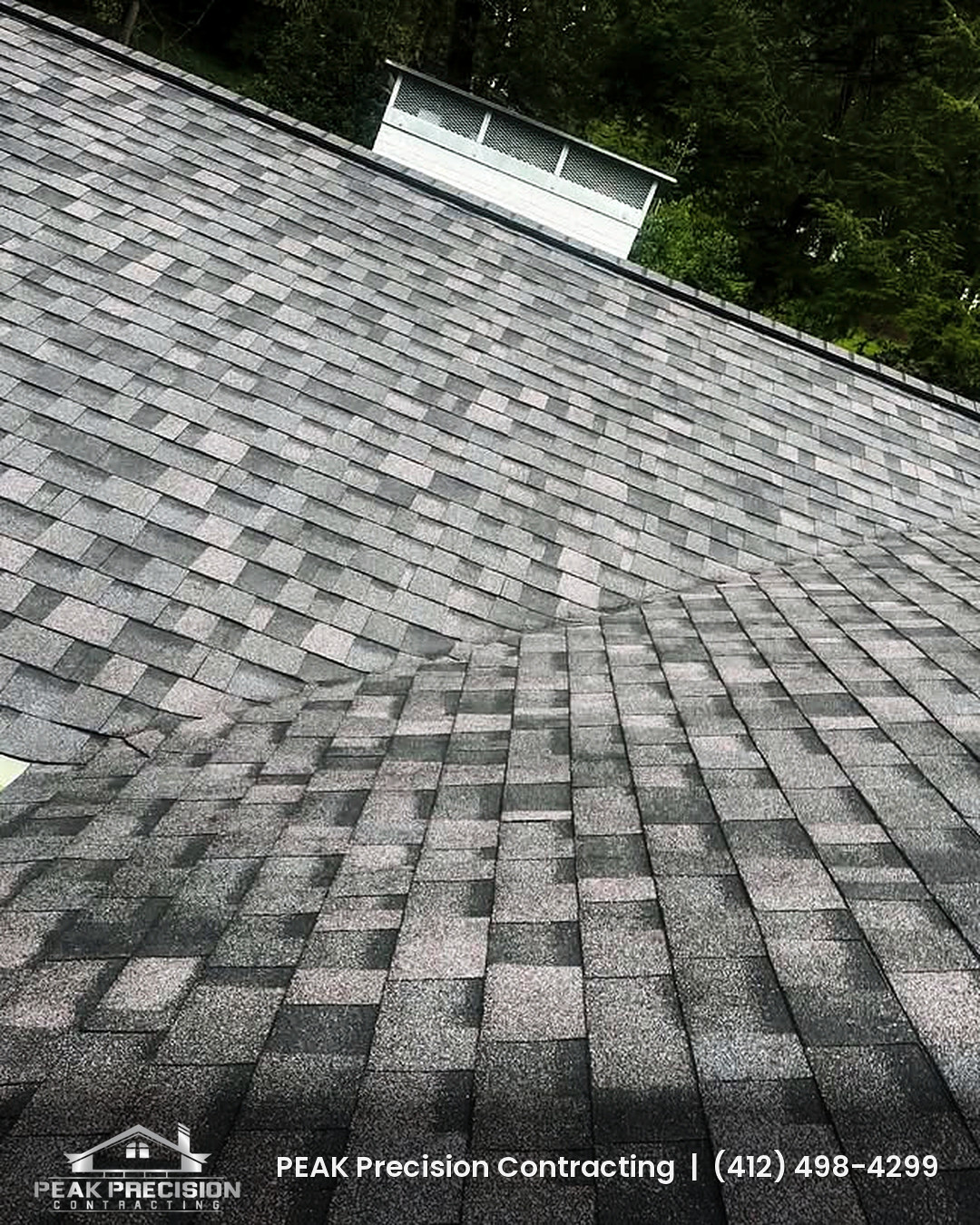
The short answer: it depends on why the roof leaked
This is general information, not legal or insurance advice. Your policy decides, so read it or call your agent. That said, most standard homeowners policies follow the same basic idea:
- Sudden, accidental damage is often covered. If a windstorm tears off shingles, a falling limb punctures the roof, or hail damages the surface and water gets in, the roof repair and the resulting interior water damage are often covered, minus your deductible.
- Wear and tear usually isn’t. Shingles that have aged out, flashing that has slowly failed, cracked pipe boots, or a leak that has been dripping for months are generally treated as maintenance issues, not insurance claims.
- Neglect can hurt a claim. Policies typically expect you to take reasonable steps to prevent further damage once you know about a leak. Waiting weeks to act can make a covered loss harder to collect on.
Some policies also settle older roofs differently, for example paying actual cash value instead of full replacement cost. That’s another reason to look at your own declarations page before you need it.
Why finding the source matters for your claim
A stain on a Bethel Park bedroom ceiling doesn’t tell you much by itself. Water can enter at a valley, a chimney, a vent, or a missing shingle and travel along rafters and decking before it shows up somewhere else entirely. If you only know where the water came out, you don’t really know why the roof leaked, and “why” is exactly what decides coverage.
That’s where leak detection comes in. When I trace a leak, I work from the inside and outside together: attic staining and wet decking, then the roof surface above it, checking valleys, flashing, penetrations, and shingles until the entry point is clear. I photograph what I find so you have a record of the source and the condition of the roof around it.
Sometimes that record points to fresh storm damage. Sometimes it shows an aging component that simply wore out. Either way, you’ll know what you’re dealing with before you call your insurer, and you’ll have a clear repair scope. Our roof repair in Bethel Park page covers the repair side.
What to do in the first 24 hours
- Protect the inside. Move furniture and electronics, put down buckets and towels, and if a ceiling is bulging with water, keep people out from under it.
- Take photos and notes. Photograph the stain, the drip, and any wet materials. Write down the date, the weather, and when you first noticed it. If a storm just came through, photograph anything on the ground, like shingle pieces or a fallen limb.
- Stay off the roof. Wet, leaf-covered shingles are slippery. Look from the ground or a window instead.
- Get the leak stopped. Temporary protection, like an emergency tarp, helps prevent further damage. See our emergency roofing page if water is actively coming in.
- Keep receipts. Save receipts for any emergency work or supplies.
- Call your agent with facts. Once you know the source, you can describe what happened clearly instead of guessing.
When filing makes sense, and when it may not
Not every leak is worth a claim. If the damage is small and the repair cost is close to your deductible, filing may not help you. If a storm clearly caused damage to the roof and the interior, it often makes sense to talk to your insurer. I can help you through the insurance claim process when there’s real damage, and I’ll be straight with you when the cause looks like age or wear instead.
After a storm, watch out for out-of-town crews knocking on doors and pushing you to sign right away. A local contractor you can call back is worth a lot when a claim drags on. Our earlier posts on what to do after storm roof damage and storm damage roof repair and insurance claims go deeper on the storm side.
Bethel Park and South Hills notes
Bethel Park has a lot of mature trees and roofs with valleys, dormers, and chimneys, which are exactly the spots where fall leaves collect and water finds its way in. Clogged gutters can back water up under the roof edge too, so I look at the whole drainage path, not just the shingles. If your gutters need attention, see our gutter replacement in Bethel Park page.
Because we’re a general contractor, the job doesn’t stop at the roof. If water reached drywall, insulation, or flooring, we handle water mitigation and interior repairs under one team. Learn more on our Bethel Park roofing contractor page.
Roof leak insurance FAQ
Does homeowners insurance cover roof leaks in Pennsylvania?
Often, when the leak comes from sudden damage like wind, hail, or a fallen tree. Usually not, when it comes from age, wear, or lack of maintenance. Your policy has the final say.
Should I call my insurance company or a contractor first?
Protect your home first, then get the source of the leak identified so you can give your insurer accurate information. Check your policy for its notice requirements.
Can you help with my claim?
Yes. If we find real damage, I can help you through the insurance claim process with photos and a clear repair scope.
Is the estimate free?
Yes. Estimates are free.
Find the leak before you file
If you’re dealing with a roof leak in Bethel Park, Upper St. Clair, Mt. Lebanon, or anywhere in the South Hills, call me at (412) 498-4299. We’re at 938 South Central Ave in Canonsburg, or reach us through our contact page. I’ll find where the water is really getting in, document it, and give you a free estimate. We won’t leave your doorstep until you’re satisfied.
[…] it and work through the claim; see our storm damage and insurance claims page and our post on whether insurance covers roof leaks. If it’s time for a new roof, we’re an Owens Corning Platinum Preferred contractor, and […]