
Wind-Damaged Siding in Carnegie: Repair It Before Winter
Late October brings fall storms, stronger gusts and nights that drop toward freezing. For homeowners in Carnegie and the nearby South Hills communities, that combination often shows up first on the outside walls of the house: a siding panel that has come unhooked and flaps in the wind, a corner piece lying in the yard, or a crack you did not notice in September.
Siding damage is easy to put off because the house still looks mostly fine from the street. The problem is what happens behind the panel. This guide covers how to spot wind damage, when a repair is enough, how insurance usually treats storm damage, and why to act before winter.
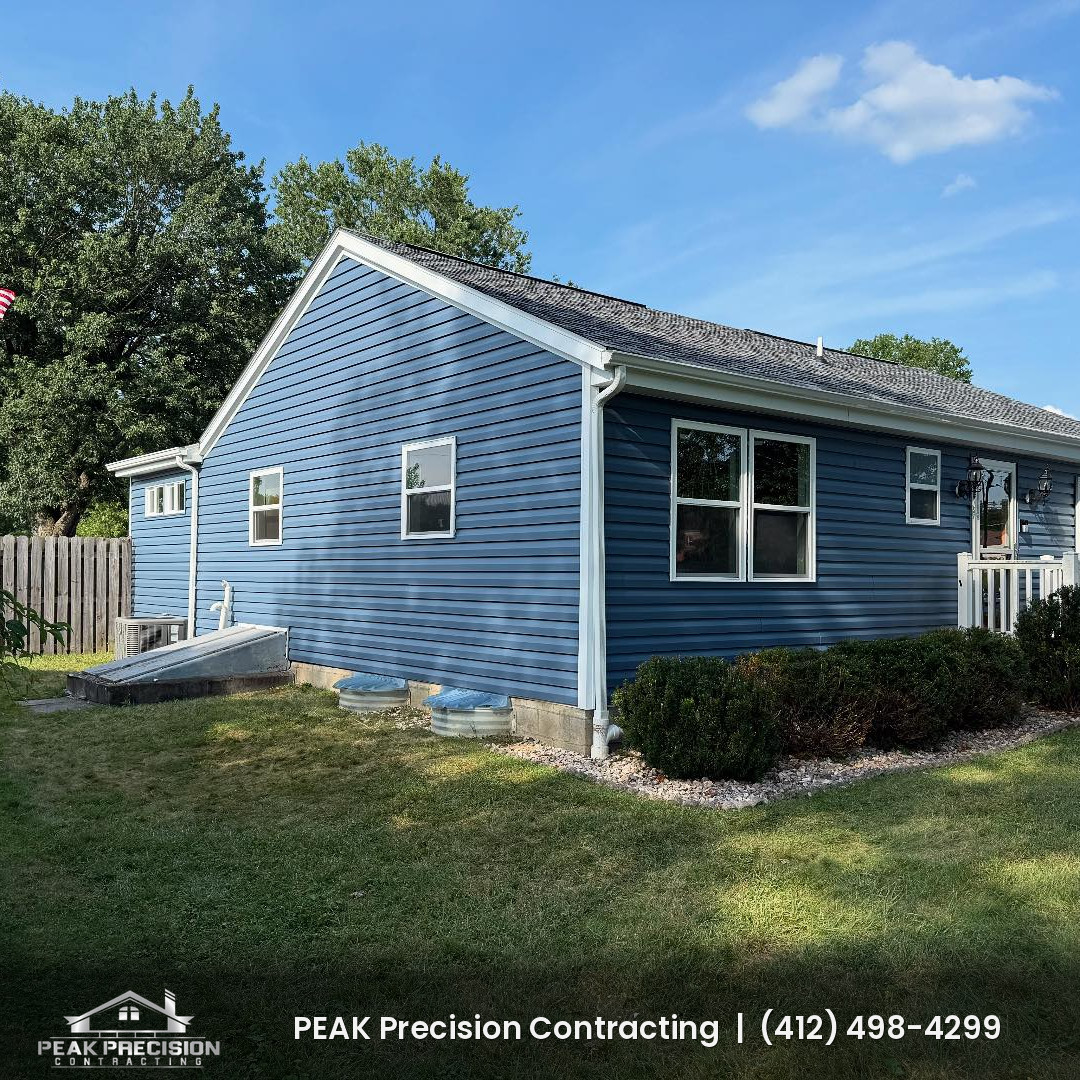
How wind damages siding
Most homes in the area have vinyl siding, and vinyl is designed to hang loosely on its nails so it can expand and contract with the seasons. Each panel locks into the one below it. That design works well until something weakens the lock or the fastening:
- Unlocked panels. Strong gusts can pull the bottom edge of a panel out of the lock on the panel beneath it. Once it is loose, the wind keeps working it, and nearby panels often follow.
- Pieces blown off. Loose panels, corner posts, J-channel and trim can tear away entirely, leaving the sheathing or house wrap exposed.
- Cracks and holes. Branches, debris and hail can crack or puncture panels. Vinyl also gets stiffer and more brittle as temperatures drop, so an impact that would leave a dent in summer can crack a panel in late fall.
Signs your siding needs attention after a storm
After a windy night, walk around the house and look from the ground. No ladder needed. Look for:
- Panels that bow out, sit crooked or move when the wind blows
- Gaps where you can see house wrap, foam board or wood sheathing
- Cracks, holes or broken edges, especially near corners and at the bottom courses
- Siding pieces, trim or corner caps in the yard or flower beds
- New water stains or peeling paint on interior walls, which can mean water is already getting behind the siding
While you are walking the house, glance up at the roof edges and gutters too. Wind that loosens siding often lifts shingles and loosens gutter sections as well. Our post on missing shingles after fall wind covers what to look for up top.
Why it matters before winter
Behind the siding, house wrap and flashing shed the water that gets past the panels. When a panel is missing or cracked, rain and melting snow hit that backup layer directly, and wind-driven rain can push water into wall cavities. Once freezing temperatures arrive, trapped moisture can freeze and thaw repeatedly, which can lead to rot in sheathing, damaged insulation and mold inside the wall.
A small repair in late October is usually much simpler than chasing water damage in March. It is also easier to work with vinyl before the coldest stretch of the year, when panels are more brittle and need extra care during installation.
Repair or replace: how to decide
Not every storm means new siding. In many cases a repair is the right answer.
When a repair usually makes sense
- The damage is limited to a few panels or one section of wall
- The panels simply came unlocked and can be re-hung and secured
- Matching panels are still available, or there are spares from the original job
- The house wrap and sheathing behind the damaged area are dry and sound
When replacement is worth a closer look
- Damage is spread across several walls
- The siding is older, faded or brittle and cracks easily when handled
- The color or profile is discontinued, so new panels will not match
- There is soft or rotted sheathing behind the panels
Matching is often the deciding factor. Siding that has been in the sun for years fades, so even the same product from the same manufacturer can look different next to it. If you are weighing a full replacement, our older post on signs it’s time to replace vinyl siding is a useful checklist, and our Carnegie siding installation page explains how we approach new siding.
Storm damage, siding and insurance
Many homeowners policies cover sudden damage from wind or hail, while wear and tear and old age are usually not covered. Every policy is different, so your policy and your adjuster make the final call. A few steps help any claim go more smoothly:
- Photograph the damage from the ground as soon as it is safe, including close-ups and wide shots of each wall.
- Note the storm date and keep any pieces that blew off.
- Prevent further damage if you can do it safely, and keep receipts for temporary repairs.
- Have a contractor document the damage before you file, so you know the full scope, including any roof or gutter damage from the same storm.
Peak Precision is an insurance claim specialist and works directly with your adjuster on covered storm damage. We never offer to cover or waive deductibles. You can learn more on our storm damage and insurance claims page.
One contractor for siding, roof and gutters
Wind rarely damages just one part of a house. Peak Precision Contracting is a general contractor first, built as a collective of tradespeople, so our team can handle siding, trim, gutters and roof repair in Carnegie as one project with one point of contact. We are an Owens Corning Platinum Preferred contractor, and if a storm opens up your roof, we offer 24/7 emergency roof repair.
Choosing colors and profiles is easier in person. At our Canonsburg showroom, open by appointment, clients can view and select samples and take samples home to compare against the house.
Wind-damaged siding FAQ
Can I just snap a loose siding panel back into place?
Sometimes a panel can be re-locked with a siding zip tool, but if the nails have pulled out or the lock is bent, it will likely come loose again in the next wind.
Can siding be repaired in cold weather?
Yes. Vinyl siding can be repaired and installed in cold weather with extra care, because cold panels are stiffer and more prone to cracking. That is one reason to schedule repairs sooner rather than in the middle of winter.
Does homeowners insurance cover wind-damaged siding?
Sudden wind or hail damage is often covered, while age and wear usually are not. Your policy and adjuster decide, so document the damage and have it inspected before filing.
Talk with Peak Precision about your siding
If fall wind has loosened, cracked or torn siding on your home in Carnegie, Scott Township, Collier Township, Bridgeville or anywhere in the South Hills, call Peak Precision Contracting at (412) 498-4299, visit our showroom at 938 South Central Ave in Canonsburg by appointment, or reach us through our contact page. We’ll look at the damage with you, explain whether a repair or replacement makes sense, and give you a detailed, no-obligation estimate. We won’t leave your doorstep until you’re satisfied. PA HIC Registration #PA132469