
How Soon Does Mold Grow After Water Damage?
I’m Devin Orsi, owner of Peak Precision Contracting in Canonsburg. We’re a collective of tradespeople covering all aspects of renovations—interior and exterior, roofing, siding, gutters, storm and insurance work, water mitigation, and mold remediation. Roof leak detection is my specialty, and mold after water damage is one of the questions I hear most from Upper St. Clair, Mt. Lebanon, and South Hills homeowners.
If you’ve had a leak, a storm, or a wet basement and you’re wondering how soon mold grows, this guide walks through the timeline, what to do in the first days, and when to call for help. Estimates are free.
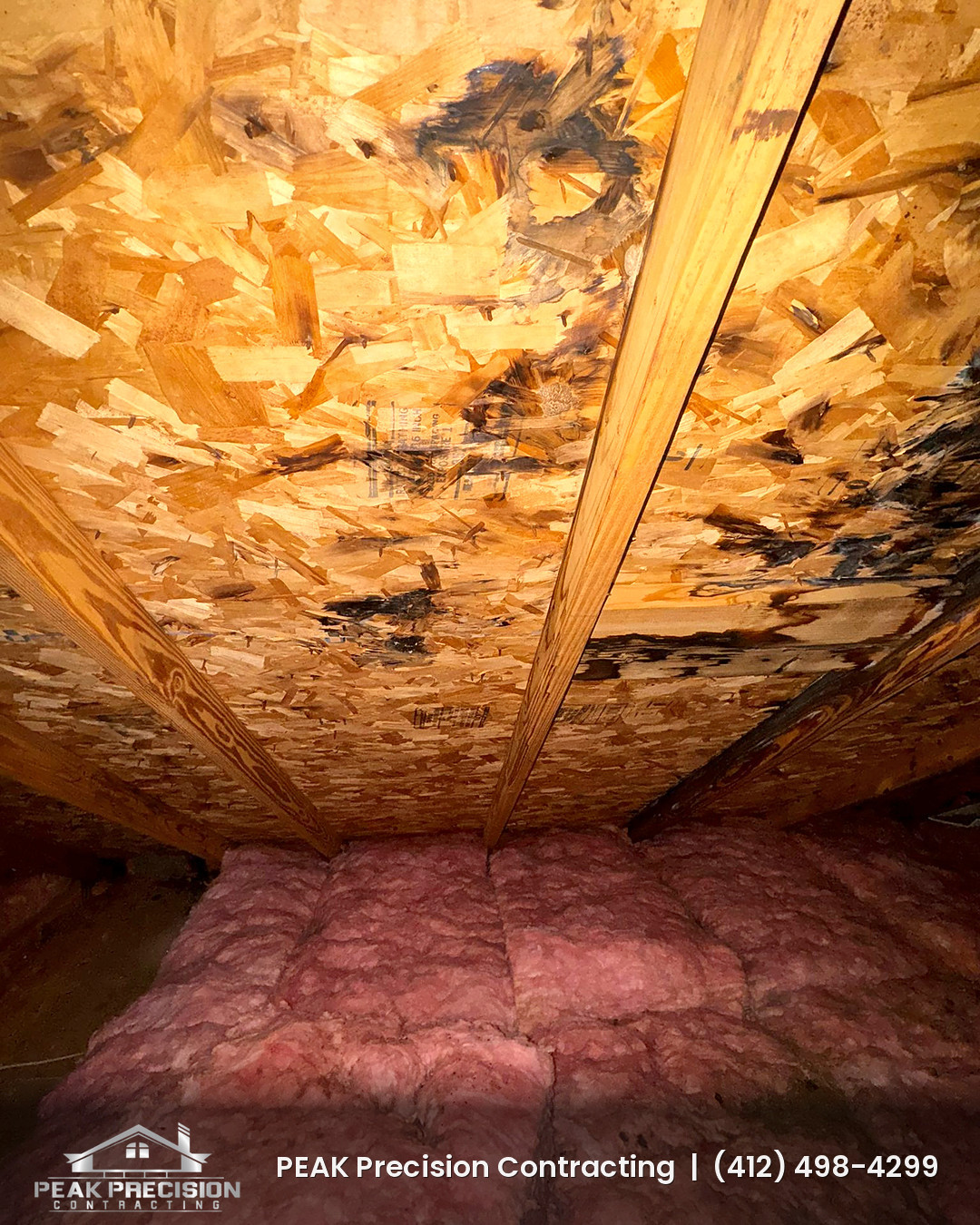
The short answer: often within 24 to 48 hours
In the right conditions—moisture, organic material (drywall paper, wood, dust), and mild indoor temperatures—mold can begin to colonize within about 24 to 48 hours after materials get wet. You may not see black spots that fast. Growth can start as a faint musty smell, slight discoloration, or fuzzy growth in a hidden cavity while the surface still looks “almost dry.”
That doesn’t mean every wet spot becomes a mold project overnight. Waiting a week “to see if it dries” after a roof leak or basement soak is still a gamble in western Pennsylvania’s damp late-September weather.
What actually drives mold after water damage
Mold needs three things. Water damage supplies the first; your house usually supplies the rest.
- Moisture. Standing water, damp drywall, wet insulation, or a slow drip that never fully dries.
- Food. Paper-faced drywall, wood framing, dust, carpet backing, and cardboard are common.
- Time and still air. Closed rooms, stuffed closets, and unfinished basements hold humidity longer after a storm.
A splash you dry the same day is different from water that soaked a wall cavity or carpet pad overnight. The longer porous materials stay damp, the more likely growth becomes.
Common water sources we see in Upper St. Clair and Mt. Lebanon
South Hills homes—Upper St. Clair, Mt. Lebanon, and nearby neighborhoods—often deal with the same moisture paths after heavy rain or a hard freeze-thaw stretch:
- Roof leaks and attic wetting. Wind-driven rain past flashing, worn shingles, or ice-related issues can stain sheathing and drip into insulation. Finding the entry point is roof leak detection work—my specialty—before anyone talks about paint or mold spray.
- Gutters and downspouts. Overflow at the fascia or water dumped at the foundation saturates soil and can show up as basement seepage days later.
- Basement and lower-level water. After heavy rain, grading, window wells, or a failed drain line can leave floors and walls wet long enough for musty growth.
- Plumbing or appliance leaks. Slow supply or drain leaks behind cabinets wet the same drywall paper mold loves.
Our roof repair in Canonsburg work often starts by tracing where water entered, not just where the stain appeared. Stopping the source comes before drywall and mold remediation.
A practical timeline after water damage
Use this as a field guide, not a lab chart. Every house differs, but the clock matters.
- Hours 0–24: Extract standing water if you can do it safely. Run fans and dehumidification on wet rooms. Pull soaked rugs and pad when practical. Document with photos for insurance.
- Hours 24–48: This is the window where growth can start on wet drywall, wood, and insulation if drying stalls. If materials are still cool and damp to the touch, don’t assume “it’ll be fine by the weekend.”
- Days 3–7: Musty odor or spotting on drywall becomes more likely if moisture remains. Hidden cavities can look worse than the room you see.
- Beyond a week: A water event can become remediation and rebuild—remove damaged materials, treat the area, then restore drywall, flooring, or trim.
Late September around the South Hills often means cool nights and damp air, which slows natural drying after a storm.
What you can do safely before we arrive
- Stay clear of water near electrical panels or outlets.
- Photograph wet areas, ceilings, and the exterior on the same side of the house.
- Move dry belongings out of the wet zone.
- Increase airflow and lower humidity if you have a dehumidifier—without blasting dust if you already see growth.
- Avoid painting over stains or sealing wet drywall; that traps moisture.
Don’t tear out large wall sections until the leak source is confirmed.
How Peak handles water damage and mold
Peak Precision is a general contractor first. When water damage leads toward mold, we don’t hand you off to three different companies for detection, remediation, and rebuild.
- Find and stop the moisture source (roof, gutters, grading-related entry, plumbing path—as the job requires)
- Water mitigation: extract, dry, and protect unaffected areas
- Mold remediation where growth has started
- Rebuild damaged finishes—drywall, flooring, paint, and related renovation work—so the room is whole again
We’re Owens Corning Platinum Preferred for roofing systems when a roof is part of the fix. Call (412) 498-4299 for a free estimate, or start from our homepage and contact page.
We won’t leave your doorstep until you’re satisfied.
Upper St. Clair, Mt. Lebanon, and South Hills notes
Many Upper St. Clair and Mt. Lebanon homes have finished lower levels, mature trees that clog gutters, and roof lines with valleys and skylights—places where small leaks hide until a heavy rain. If you smell must after storms or see attic staining, say so on the estimate call and send photos. We’re at 938 South Central Ave in Canonsburg and work throughout the South Hills.
Mold after water damage FAQ
Does mold always grow within 48 hours?
Not always—but 24 to 48 hours is the commonly cited window when wet materials aren’t drying. Cool, damp South Hills weather makes that window more relevant, not less.
Can I just spray bleach and move on?
Surface spray doesn’t fix water still in a wall or a leak still active above. Stop the source, dry the assembly, then address growth and rebuild as needed.
Is the estimate free?
Yes. Estimates are free. You’ll get a clear scope before work is scheduled.
Do you only do mold, or the rebuild too?
We’re a full general contracting collective. Mitigation, remediation, and the renovation to put the room back together can stay under one roof.
What if I’m not sure whether it’s a roof leak or basement seepage?
That’s common. Describe what you see, send photos, and we’ll help narrow the path—including roof leak detection when the clues point up.
Don’t wait out the damp week
If you’ve had water damage in Upper St. Clair, Mt. Lebanon, or elsewhere in the South Hills and you’re watching the clock on mold, call me at (412) 498-4299. Peak Precision Contracting will help you stop the source, dry what can be saved, remediate what can’t, and rebuild cleanly. Free estimates. We won’t leave your doorstep until you’re satisfied.
[…] Musty smell or mildew. Long-term condensation can lead to mold on the sheathing, which is a problem of its own (see how soon mold can grow after water damage). […]
[…] uneven subfloor, or water damage under the sink. If we find water damage or mold, we can handle the mold and water mitigation side of it in-house instead of sending you to another company. I’ll show […]