
Can You Replace a Roof in Winter? A Bridgeville Homeowner’s Guide
Peak Precision Contracting is a general contractor based in Canonsburg, a collective of tradespeople who handle interior and exterior renovations, roofing, siding, gutters, storm and insurance claims, water mitigation, and mold remediation. Roof leak detection is our specialty, and this time of year one question comes up again and again from homeowners in Bridgeville and across the South Hills: can a roof still be replaced once the weather turns cold?
The short answer is yes. Roofs are replaced in western Pennsylvania all winter long. But cold weather changes how shingles behave, how a crew has to work, and how you should plan. Here’s what to know before deciding whether to replace now or wait until spring.
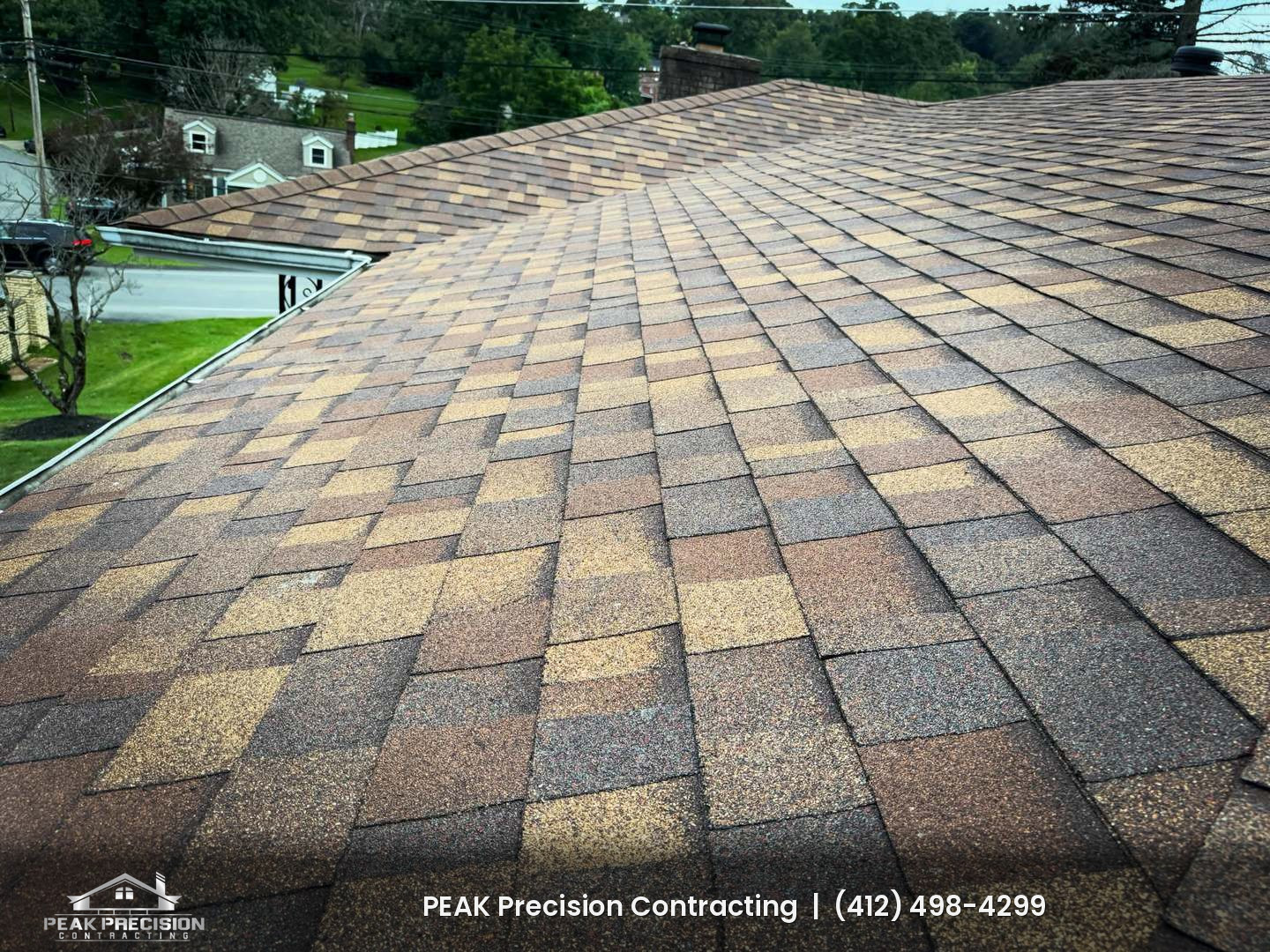
Can you replace a roof in winter?
Yes, with the right preparation. Asphalt shingles don’t stop working when the temperature drops, but they do get stiffer, and the adhesive that holds them down needs warmth to activate. A winter roof replacement done to the manufacturer’s instructions can perform just as well as one done in June. A rushed one on a wet or icy deck can fail at the first strong wind or thaw.
How cold weather affects shingles
Most asphalt shingles, including Owens Corning shingles, have a factory-applied strip of sealant that is activated by heat from the sun. Once it warms up, each shingle bonds to the course below it, which is what helps the roof resist wind.
Owens Corning’s cold-weather installation bulletin applies when air and roof surface temperatures are at or below 40°F. In those conditions, the manufacturer notes that shingles may not seal right away and may take longer to lay flat. Its recommendations include:
- Hand sealing perimeter shingles. Shingles along the edges of the roof are sealed by hand with dabs of asphalt roof cement, so they resist wind uplift until the sealant strip activates.
- Leaving a small gap at end joints. A slight gap between shingle ends gives them room to expand in warmer weather so they don’t buckle.
- Extra care in handling. Cold shingles are stiffer and can crack if bent or dropped.
Owens Corning’s installation instructions also call for keeping the wood roof deck from getting wet before, during, and after installation. In a Pittsburgh winter, that means timing tear-off around the forecast and never shingling over frost, ice, or snow.
Signs your roof shouldn’t wait until spring
Consider repairing or replacing before winter sets in if you notice:
- Active leaks, ceiling stains, or wet insulation in the attic
- Missing, cracked, or curling shingles, especially after fall wind
- Granules collecting in gutters and at the bottom of downspouts
- Soft or sagging spots in the roof deck
- Repeated repairs in the same area
Snow, ice dams, and freeze-thaw cycles are hard on a failing roof, and a small leak in November can mean wet drywall and mold by February. Our fall roof inspection checklist walks through what to look for, and our post on ice dam prevention explains how winter leaks start at the eaves.
If you see a stain but aren’t sure where the water is coming from, start with leak detection. Water often travels along rafters before it shows up, so the stain is rarely right under the source. Our post on why your ceiling leaks when it rains explains how.
Pros and cons of a winter roof replacement
Reasons to move forward now:
- You stop an active leak before winter weather makes it worse.
- You head into spring with the project done.
Things to plan for:
- Shorter days and weather delays can stretch the schedule.
- Tear-off has to be timed around rain and snow so the deck stays dry.
- Shingles may not fully seal until warmer, sunny days arrive, which is why the cold-weather steps matter.
What to ask a roofer about winter installation
- How do you handle cold-weather installs? The answer should line up with the shingle manufacturer’s instructions, including hand sealing where it’s required.
- How do you protect the house if weather moves in mid-job? Ask how the roof will be covered and kept dry if tear-off has started.
- What goes under the shingles? Underlayment and ice barrier along the eaves matter in a climate with ice dams. Your contractor should follow local code and the manufacturer’s requirements.
- Are you registered with the state? Pennsylvania home improvement contractors must register with the Attorney General’s office. Our post on spotting storm-chaser roofers explains how to check.
- What warranties come with the roof? Manufacturer coverage on the shingles and a contractor’s craftsmanship coverage are two separate things. Ask about both.
Why Bridgeville homeowners call Peak Precision
Peak Precision is an Owens Corning Platinum Preferred contractor, the highest tier in the Owens Corning network, which gives our customers access to the highest tier of warranty available in the marketplace. We also offer optional craftsmanship warranties up to 25 years. That craftsmanship coverage is ours and is separate from the Owens Corning manufacturer warranty. Learn more on our roof replacement in Bridgeville page and our Owens Corning Platinum Preferred post.
Picking a shingle color is easier in person. At our Canonsburg showroom you can view and select samples and take samples home to see them against your siding and trim in daylight.
If winter storm damage is part of the picture, Peak is an insurance claim specialist. We work with adjusters, document the damage, and write a clear scope of repairs. We never offer to cover or waive deductibles. See our storm damage and insurance claims page. And if a storm opens up your roof in the middle of winter, Peak offers 24/7 emergency roof repair.
Winter roof replacement FAQ
What is the lowest temperature for installing shingles?
There isn’t a single cutoff for every product. Owens Corning’s cold-weather steps apply at or below 40°F, and the work also depends on whether the deck is dry and clear of frost, ice, and snow.
Will my new shingles seal if they’re installed in December?
The sealant strip may not activate until warmer, sunny weather. That’s why the manufacturer calls for hand sealing perimeter shingles during cold-weather installs, so the roof holds up against wind in the meantime.
Should I repair now and replace in spring?
Sometimes. If the roof has life left and the problem is a single leak or damaged area, a repair can carry you through winter. If the roof is near the end of its life or has widespread damage, replacing it now may make more sense. A roof inspection and estimate will help you decide.
Plan your roof with Peak Precision
If you live in Bridgeville, South Fayette, Upper St. Clair, or anywhere in the South Hills and want to know whether your roof can wait until spring, call Peak Precision Contracting at (412) 498-4299, visit our showroom at 938 South Central Ave in Canonsburg by appointment, or reach us through our contact page. We’ll inspect the roof, give you a detailed estimate, and do the work with quality craftsmanship. We won’t leave your doorstep until you’re satisfied. PA HIC Registration #PA132469