
Roof Only Leaks in Wind-Driven Rain? A Peters Township Guide
Most roofs in Peters Township and McMurray shed ordinary rain without trouble. The leaks that confuse homeowners show up during a different kind of storm: a hard, sideways rain pushed by 30 to 50 mph gusts, the kind that rolls through Washington County every late fall. A ceiling stain appears, the roof looks fine from the yard, and the next gentle rain leaves everything dry. That pattern almost always points to wind-driven rain, and it calls for a different way of finding the leak.
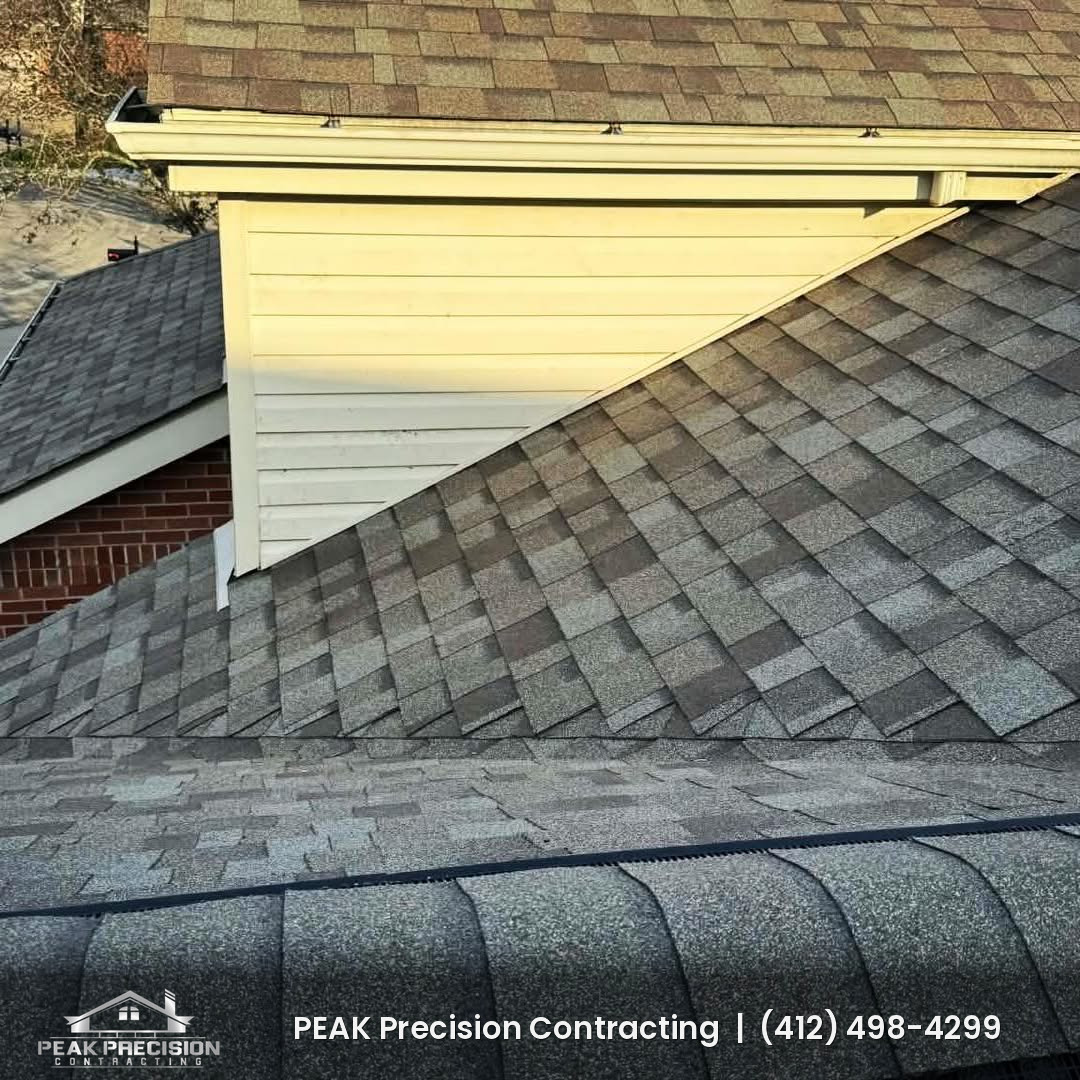
Why sideways rain finds gaps that normal rain misses
A shingle roof is designed around gravity. Each course overlaps the one below, flashing sheds water downhill, and vents are shielded from water falling straight down. When strong wind drives rain horizontally, two things change. Water is pushed up and under laps that were never meant to hold it back, and air pressure differences across the roof can pull moisture into openings on the leeward side. Small weaknesses that stay dry for years let water in, then stop once the wind dies down.
So a wind-driven leak is often intermittent and directional. If water only appears when storms come from the west or southwest, note it. That clue helps us more than almost anything else.
The most common entry points on Peters Township roofs
Peters Township and McMurray homes range from older ranches to newer two-story builds with dormers and attached garages. In our roof leak detection work, wind-driven leaks usually come from the same short list:
Ridge, box, and gable vents
Vents are openings by design. Older ridge vents without an external baffle, box vents with damaged hoods, and gable louvers facing the wind can let sideways rain blow into the attic.
Step flashing and sidewalls
Anywhere a roof runs up against a wall, such as a second story above a garage, a dormer cheek, or a split-level transition, water depends on step flashing and the siding or trim lapped over it. Wind can drive water behind siding that sits too tight to the shingles or behind flashing pieces that were reused or face-nailed during an earlier repair.
Missing kickout flashing
At the bottom of a roof-to-wall joint, a small bent piece called kickout flashing steers water into the gutter instead of behind the wall. When it is missing, wind-driven runoff can soak the sheathing and framing below. The damage often shows up as stained drywall or soft trim below rather than a ceiling spot.
Rake edges and drip edge
The sloped edges at gable ends take the full force of crosswinds. Pennsylvania’s Uniform Construction Code now follows the 2021 International Residential Code for permits applied for on or after January 1, 2026, and that code requires drip edge at both eaves and rake edges of asphalt shingle roofs. Many older roofs were built without rake drip edge, which leaves the deck edge exposed when rain blows sideways.
Lifted shingles, nail pops, and chimneys
Shingles that have lost their seal, nails backing out under a tab, and chimney counterflashing that has pulled out of its mortar joint all open small paths that only matter when wind pushes water at them. See our guide to missing shingles after fall wind for what to look for from the ground.
What to do during and right after a windy storm
You can help narrow down a wind-driven leak with a few safe steps. Do not go on the roof in wet or windy conditions.
- Note the date, time, wind direction, and which room or wall showed water.
- If your attic is accessible and safe to walk, check it with a flashlight during or shortly after the storm. Look for wet sheathing, damp insulation, or drips near vents, chimneys, and the walls under roof-to-wall joints.
- Photograph wet areas and stains, inside and out.
- Move belongings and catch drips. If water comes through a light fixture, shut that circuit off at the panel.
If water is actively coming in, our 24/7 emergency roof repair team can respond to tarp or temporarily secure the area. Our post on emergency steps for a roof leaking in a storm walks through the first hour in more detail.
How we track down a wind-driven leak
A quick look from a ladder rarely finds these leaks. Our approach is methodical:
- We start inside, matching the stain to the framing and roof above it, then follow the water trail in the attic back toward its highest point.
- On the roof, we inspect every vent, flashing detail, and edge on the side that faces the storm direction you noted.
- When needed, we run a controlled water test in sections, starting low on the roof and working uphill, with someone watching inside. Testing bottom-up keeps one area from masking another.
- We photograph what we find so you see the cause before any repair decision.
Once the source is confirmed, a repair might be as simple as resealing or replacing a vent, installing kickout flashing, or rebuilding a section of step flashing. If the roof is near the end of its life or has many weak points, we will explain the difference between a targeted roof repair in McMurray and a full replacement so you can decide with the facts.
Building a roof that stands up to wind
As an Owens Corning Platinum Preferred contractor, we install Owens Corning roofing systems, most often TruDefinition Duration shingles, with matching underlayment, starter, ridge, and ventilation components. Details that matter most in wind-driven rain include drip edge at eaves and rakes, properly lapped step flashing with kickouts, sealed starter courses at the edges, and vents rated for the exposure. We offer optional craftsmanship warranties up to 25 years, which are separate from the Owens Corning manufacturer warranty on the materials. You can read more on our roof warranty page.
If wind damage is involved, we can also help you document it and work through the storm damage insurance claim process. Your deductible remains your responsibility under your policy. Homeowners who want to compare shingle colors can visit our Canonsburg showroom by appointment, pick out samples in person, and take them home.
Frequently asked questions
Why does my roof only leak in some storms?
Leaks that appear only in storms with strong wind usually come from vents, flashing, or edges that are exposed to water pushed sideways.
Can a newer roof leak in wind-driven rain?
Yes. A newer roof can still leak if a vent, flashing detail, or edge was not installed for the exposure.
Is a wind-driven leak covered by insurance?
It depends on your policy and on whether storm damage caused the opening. We document what we find so you and your adjuster can review it.
Schedule a leak inspection in Peters Township
If a recent storm left a stain or drip you cannot explain, call Peak Precision Contracting at (412) 498-4299 or reach us through our contact page for a no-obligation estimate. We serve homeowners throughout Peters Township, McMurray, and the South Hills, and we won’t leave your doorstep until you’re satisfied. PA HIC Registration #PA132469