
Crumbling Mortar, Flaking Brick or a Cracked Chimney Crown? A Pittsburgh Winter Guide
Pittsburgh is a brick town, from city rowhouses to South Hills ranches. Brick is durable, but the mortar between it is not meant to last forever, and winter is when small masonry problems grow. Water gets into a cracked joint or chimney crown, freezes, expands and pushes the gap wider. Over a full Western Pennsylvania winter, a minor repair can become loose brick, interior leaks and damp walls by spring. Here is what to look for now.
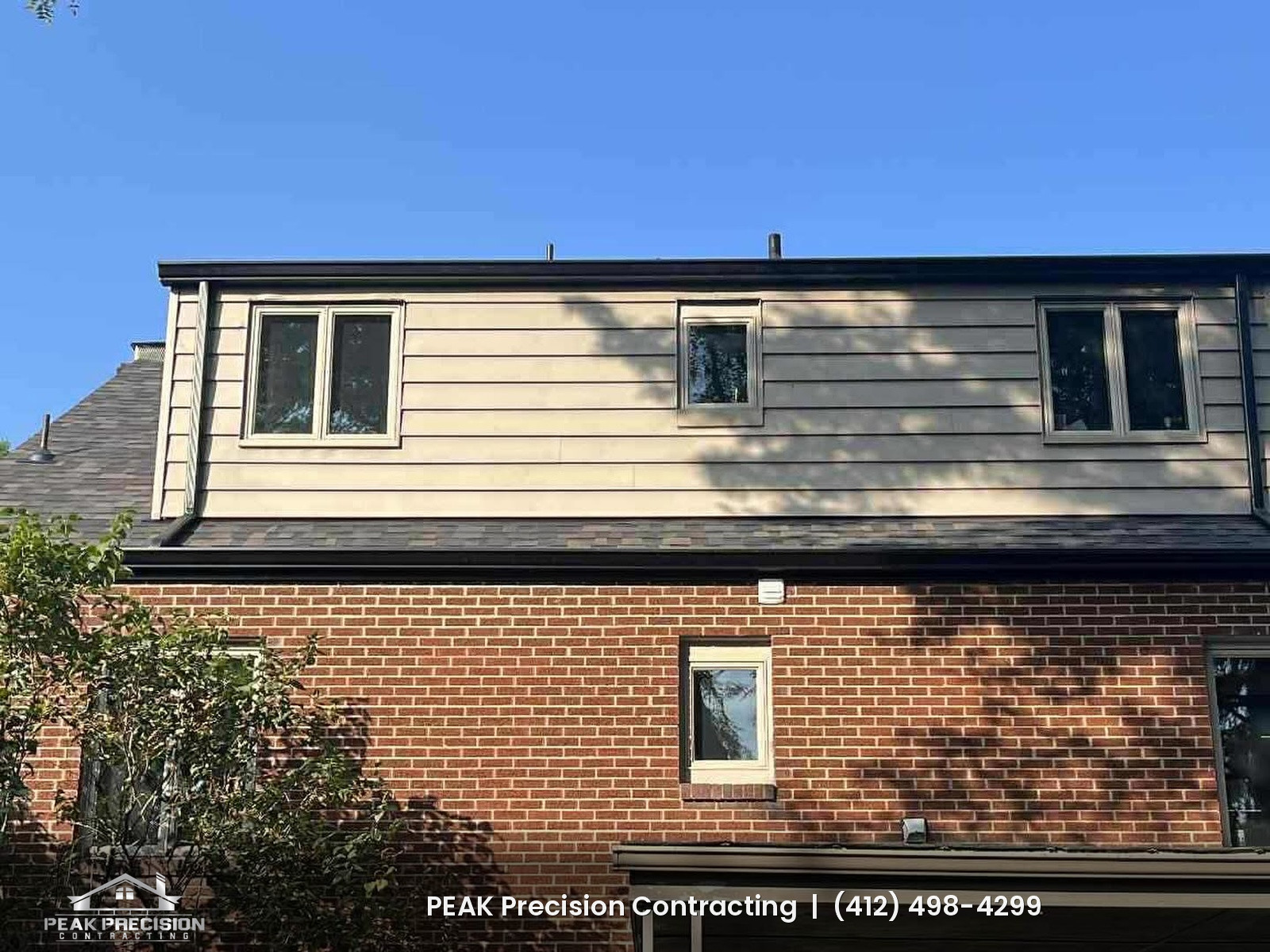
Why freeze-thaw is hard on brick and mortar
Brick and mortar are porous. They absorb some water from rain, melting snow and splashback, and in a healthy wall that water dries back out. The trouble starts when water gets in faster than it leaves, usually through cracked or recessed mortar joints, a failed chimney crown or a gutter that overflows onto the same section of wall every storm. When that saturated masonry freezes, the ice expands inside the joints and the brick faces. Each cycle opens cracks a little more, which lets in more water the next time.
Warning signs to check from the ground
You can spot most early masonry problems without a ladder. Walk around the house on a dry day and look for:
– Recessed or crumbling mortar: joints that sit noticeably back from the brick face, look sandy or come out when you scrape them with a key.
– Spalling brick: brick faces that have flaked, popped or peeled off, leaving a rough surface underneath.
– White staining (efflorescence): a white, powdery or crusty deposit on the brick. On its own it is mostly cosmetic, but the Brick Industry Association explains that it forms when water moves through the masonry and carries salts to the surface, so it tells you where water is getting in.
– Chimney damage: a cracked or crumbling crown at the top, loose brick near the top courses, a leaning stack or rust stains below the cap.
– Stains and dampness inside: water marks on ceilings or walls next to the chimney, peeling paint on interior brick or a musty smell in a finished room or basement along an exterior wall.
The chimney: where masonry damage usually starts
The chimney is the most exposed masonry on a house, and a cracked or poorly sloped crown holds water. The International Residential Code calls for masonry chimneys to have a cap of concrete, metal or stone that is sloped to shed water, has a drip edge and has a bond break around the flue liners. Older chimneys often have a thin mortar crown instead, which cracks and lets water straight down into the stack.
Leaks around a chimney are not always the masonry, though. Flashing where the chimney meets the roof is a frequent culprit, and we cover it in our guide to chimney flashing leak repair.
The National Fire Protection Association’s standard NFPA 211, which the Chimney Safety Institute of America follows, says chimneys, fireplaces and vents should be inspected at least once a year. If you use a fireplace or wood stove, have a certified chimney sweep inspect the flue and liner. Our chimney inspection checklist explains what it covers. The crown, exterior masonry and flashing are where we come in.
Repointing done right: why the mortar matters
Repointing, or tuckpointing, means removing deteriorated mortar to a sound depth and packing in new mortar. The mortar choice decides whether the repair protects the wall or damages it. The National Park Service’s Preservation Brief 2 on repointing mortar joints explains that new mortar should be softer and more vapor permeable than the brick around it. A hard, cement-heavy mortar on older, softer brick can trap moisture and force the stress into the brick itself, which leads to the spalling homeowners are trying to prevent.
A few other points worth knowing:
– Joints should be raked out evenly and deep enough to hold the new mortar, not just skim-coated.
– Clear masonry sealers are not a substitute for repointing, and some can trap moisture in the wall. Fix the joints and the water source first.
– Mortar needs to cure in the right temperature range, so exterior masonry is scheduled around the weather.
If your home is in one of the City of Pittsburgh’s designated historic districts, exterior masonry work may need review by the city before it starts, so check with the city first.
Fix the water source, not just the brick
Masonry damage is often a symptom, so look above it before repointing. Overflowing gutters, a downspout dumping against the foundation, a missing kickout flashing or ice dams along the eaves can soak the same area every storm. Our guide to ice dam prevention covers the roof edge side of the problem.
If water has already come inside, soaked drywall, insulation or a finished basement needs to be dried properly. Our water mitigation service handles drying and moisture checks, and if you see or smell mold near the damp area, our mold remediation team can assess it.
How we handle masonry and brick repairs
As a general contractor, we handle masonry together with the roofing, flashing, gutters and interior repairs that often go with it. We find where the water is getting in, repair the masonry with mortar suited to the brick, fix the source and restore interior damage, with one point of contact. For projects involving storm damage, our insurance claim specialists can help you document it for your insurer. Deductibles remain the policyholder’s responsibility. For leaks that cannot wait, we provide 24/7 emergency roof repair.
Frequently asked questions
Can masonry be repaired in the winter?
Mortar needs suitable temperatures to cure, so most repointing is scheduled for milder weather. Emergency repairs and temporary protection, like covering a failed chimney crown, can often happen sooner.
Should I seal my brick?
Not as a first step. Repair cracked joints and stop the water source first. Some sealers can trap moisture and make freeze-thaw damage worse.
Do you work outside Pittsburgh?
Yes. We work throughout Canonsburg, Peters Township, Upper St. Clair, Bethel Park, Mt. Lebanon, Bridgeville, South Fayette, Cecil, Washington and the South Hills.
Get your brick and chimney checked before winter sets in
Call Peak Precision Contracting at (412) 498-4299 or request a no-obligation estimate. We are a general contractor covering interior and exterior renovations, masonry, roofing, siding, gutters, storm and insurance claims, water mitigation and mold remediation, and an Owens Corning Platinum Preferred contractor. Since 2016 we have worked from 938 South Central Ave in Canonsburg, where you can visit our showroom by appointment, pick out samples and take them home. Our work is backed by up to 25-year craftsmanship guarantees, separate from the up to 50-year limited lifetime manufacturer warranty on roofing through Owens Corning (see our warranty page), and we won’t leave your doorstep until you’re satisfied. PA HIC Registration #PA132469
Sources
– National Park Service, Preservation Brief 2: Repointing Mortar Joints in Historic Masonry Buildings
– Brick Industry Association, Technical Note 23A: Efflorescence, Causes and Prevention
– Chimney Safety Institute of America, Homeowner Resources (NFPA 211 annual inspection)
– International Residential Code, Section R1003.9.1 (chimney caps)