
How Much Snow Can Your Roof Hold? A Pittsburgh Homeowner’s Winter Guide
Pittsburgh does not get buried every winter, but it does get its share of heavy, wet snow, and the timing matters. National Weather Service normals for Pittsburgh show only a couple of inches in November, then 7.7 inches in December, 13.3 inches in January and 11.7 inches in February. The snow that tests a roof usually arrives after the holidays. Mid-November is the right time to ask the question homeowners search for every year: how much snow can my roof actually hold?
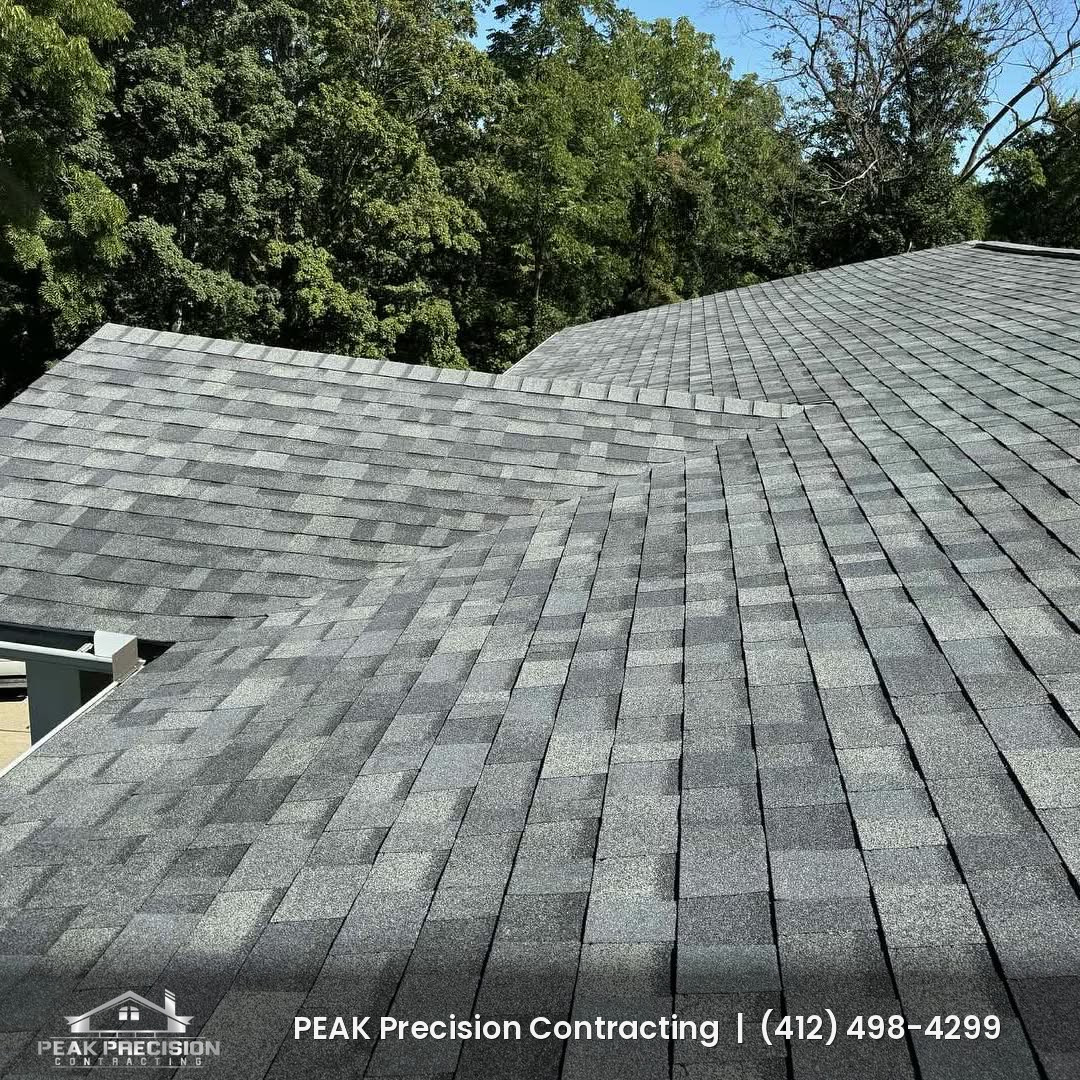
Snow depth is not the same as snow weight
A foot of snow on the roof can weigh very different amounts depending on what kind of snow it is. FEMA’s Snow Load Safety Guide (FEMA P-957) puts one foot of fresh snow anywhere from about 3 pounds per square foot for light, dry snow to about 21 pounds per square foot for wet, heavy snow. Ice is heavier still: one inch weighs a little less than 5 pounds per square foot, and a foot of ice weighs roughly 57 pounds per square foot.
That is why the same 10 inches can be harmless one week and a concern the next. Western Pennsylvania winters often swing above and below freezing, and FEMA notes that this melt-and-refreeze cycle turns snow into ice and ice dams, concentrating weight at the eaves.
What a typical house roof is built to carry
There is no single number for every home. Design snow loads depend on the building code in effect when the house was built, plus roof slope, framing and wind exposure. As a general rule of thumb, the U.S. Department of Energy’s Building America Solution Center, citing the Insurance Institute for Business & Home Safety, says most residential roofs should be able to support about 20 pounds per square foot of snow before they become stressed, unless the roof structure is damaged or decayed.
That last part matters for older Pittsburgh homes. Rotted decking, a cracked rafter or framing altered during an old remodel will not perform like new. If you have ever noticed soft spots or attic stains, read our guide to rotted roof decking and soft spots before the snow season starts.
Where snow piles up on a pitched roof
Snow does not sit evenly. FEMA points out that wind drifts snow onto the downwind side of the ridge, and that valleys where two sloped roofs meet collect deeper snow than the rest of the roof. Chimneys, dormers and porch roofs that tie into the main roof are also common drift spots. Those are also the spots where flashing tends to leak as the snow melts.
Warm attics make it worse. Heat escaping into the attic melts snow from below, the water runs down to the cold eaves and refreezes into an ice dam. Insulation and ventilation keep the roof cold and even. Our guides to ice dam prevention and attic ventilation and ridge vents explain how that works.
Warning signs your roof is under too much load
FEMA lists several signs that a roof is overstressed during a snow event. Inside the house, watch for:
– Sagging ceiling boards or drywall, especially on the top floor
– Popping, cracking or creaking sounds from the attic
– Interior doors that suddenly stick or will not close
– New cracks in walls or masonry
– Sagging roof framing or sheathing, or cracked or split wood visible in the attic
– Roof leaks that appear during or right after heavy snow
If you see any of these, keep people out of the rooms below and call a professional right away. Our emergency roof leak steps cover what to do while you wait for help.
Should you clear snow off your roof?
Usually, no. FEMA’s guide says that more often than not, attempting to remove snow from a roof is more hazardous than beneficial, both to the people doing it and to the roof itself.
If a low roof edge or a porch roof truly needs relief, FEMA recommends working from the ground with a non-metallic roof rake, since metal rakes can damage roofing materials. Do not chip at ice with picks or sharp tools, and leave a couple of inches of snow on the roof rather than scraping down to the shingles. Keep people and cars clear of the eaves while you work.
How to get your roof ready before the heavy snow
– Clear gutters and downspouts so meltwater has somewhere to go. See our gutter repair or replacement guide.
– Look in the attic for daylight, damp insulation or dark stains on the decking.
– Have loose, cracked or missing shingles and worn flashing repaired before temperatures stay below freezing.
– Check fascia and soffits; rot there gives ice dams an easy way in. Our fascia and soffit guide covers the signs.
– If the roof is near the end of its life, our guide to replacing a roof in winter explains what can and cannot wait until spring.
Frequently asked questions
How much snow is too much for a roof in Pittsburgh?
There is no single depth. A foot of light snow is about 3 pounds per square foot and a foot of wet snow about 21, per FEMA. Layered snow and ice, valley drifts or a damaged structure are what push a roof past its limits.
Does homeowners insurance cover snow damage to a roof?
Many policies address sudden damage from the weight of snow or ice, but coverage depends on your policy and the cause. We can inspect the roof, document what we find and help you through the claim process; your insurer makes the coverage decision. You can learn more on our storm damage and insurance claims page and in our guide to documenting storm damage.
Can you repair a roof in the winter?
Yes. Leak repairs, flashing work and emergency tarping happen year-round, and shingle work follows Owens Corning’s cold-weather instructions on suitable days.
Roof inspections and winter roof repair in Pittsburgh and the South Hills
Want to know how your roof will hold up this winter? Call Peak Precision Contracting at (412) 498-4299 for a no-obligation estimate. We are a general contractor and collective of tradespeople, and roof leak detection is our specialty, so we look for the source of a problem, not just the stain on the ceiling. We offer 24/7 emergency roof repair, and as an Owens Corning Platinum Preferred contractor we install mostly Owens Corning TruDefinition Duration shingles. We also handle siding, gutters, storm and insurance claims, water mitigation, mold remediation and interior renovations. Since 2016 we have worked from 938 South Central Ave in Canonsburg, where you can visit our showroom by appointment, pick out samples and take them home. Our work is backed by optional craftsmanship warranties up to 25 years, separate from the Owens Corning manufacturer warranty on roofing products (see our warranty page), and we won’t leave your doorstep until you’re satisfied. PA HIC Registration #PA132469
Sources
– FEMA P-957, Snow Load Safety Guide (2013)
– U.S. DOE Building America Solution Center, Managing Snow Loads on Roofs and Decks
– National Weather Service Pittsburgh, Snowfall Records and 1991-2020 Normals
– Owens Corning, Duration Series Shingles Installation Instructions