
Painting Inside in Winter: A Cecil Township Homeowner’s Guide
Peak Precision Contracting is a general contractor based in Canonsburg, a collective of tradespeople who handle interior and exterior renovations, roofing, siding, gutters, storm and insurance claims, water mitigation, and mold remediation. Once the leaves are down in Cecil Township, many homeowners look at the walls they’ll be staring at all winter and ask: is it a bad idea to paint inside when it’s cold out?
Usually it isn’t. Winter can be a good time for interior painting, as long as the space is warm enough for the product, the surfaces are dry, and the room gets fresh air. Here’s what to know before you plan a winter painting project in Cecil, Canonsburg, or anywhere in the South Hills.
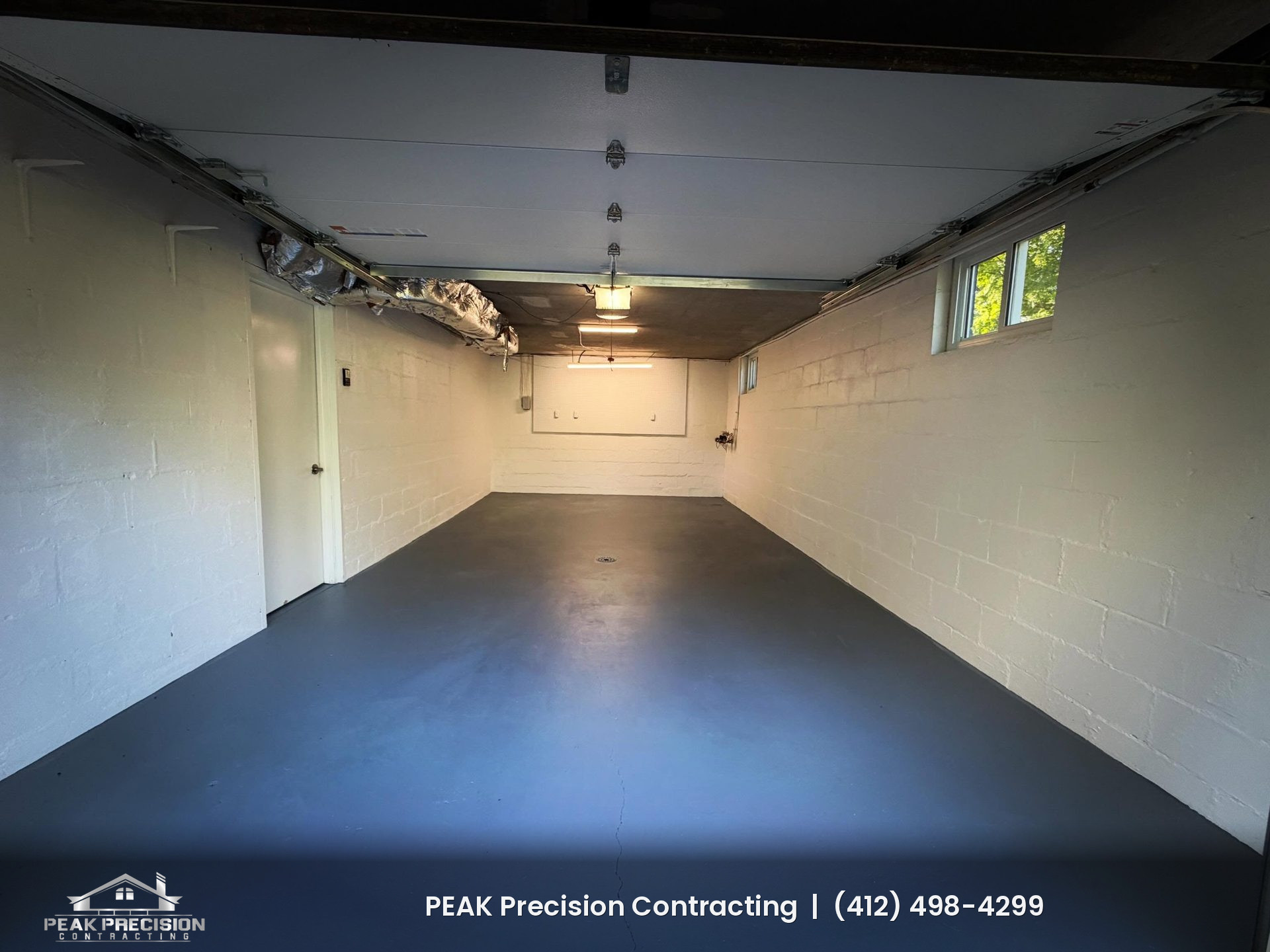
Is winter a good time to paint inside?
For most heated rooms, yes. Bedrooms, living rooms, hallways, and kitchens stay at a steady temperature all winter, which is what paint needs to go on smoothly and cure properly. Winter air also tends to be drier, and lower humidity can help paint dry evenly.
The spaces that need more thought are the ones that aren’t fully heated: garages, unfinished basements, enclosed porches, and bonus rooms over the garage. Those can get much colder on a January night, and that’s where most winter painting problems start.
Temperature: read the label, not just the thermostat
Every paint and primer lists its own application conditions on the label and product data sheet. Many latex products call for air and surface temperatures of at least 50°F, and some low-temperature formulas are rated lower. A few details matter more than people expect:
- Surface temperature counts, not just air temperature. A concrete block wall or a slab floor can be much colder than the air in the room, especially along outside walls.
- It has to stay warm after painting. Manufacturers typically require temperatures to stay above the minimum while the coating dries and cures, not just while it’s being rolled on.
In an unheated garage or basement, that can mean warming the space ahead of time and keeping it there through drying, or waiting for milder weather.
Ventilation and drying when the house is closed up
In summer, you air the house out and the paint smell clears quickly. In winter, the house is sealed up, so plan for airflow. The EPA recommends increasing ventilation when using products that release volatile organic compounds (VOCs), and following the label directions. Low-VOC paints are worth asking about if anyone in the house is sensitive to odors.
Run exhaust fans, let fresh air in for short periods when the weather allows, and give each coat the full recoat time on the label. Cold, still air slows drying, and rushing a second coat is an easy way to end up with a soft, easily marked finish.
Garages, basements, and block walls
Masonry walls like the ones in the photo above need extra prep. The surface has to be clean and dry, and the manufacturer may call for a specific masonry primer or block filler before the topcoat. Concrete floors are a separate product category altogether. Use a coating made for floors, and follow its temperature and cure requirements before cars or foot traffic go back on it.
If a basement wall is damp, stained with white mineral deposits, or peeling, paint won’t fix it. That is a moisture problem first. Our post on finishing a basement in winter covers why moisture has to be handled before any finish work.
Fix the cause before you paint over a stain
A brown ring on the ceiling or a bubbling patch on a wall is a sign water got in somewhere. Paint hides it for a while, but the stain usually comes back, and wet drywall or framing behind it can lead to mold. Roof leak detection is our specialty, and the water often enters well away from where the stain shows up. Our posts on why your ceiling leaks when it rains and how soon mold can grow after water damage explain what to check first.
If the damage came from a storm, Peak is an insurance claim specialist. We work with adjusters, document the damage, and write a clear scope of repairs. We never offer to cover or waive deductibles. Learn more on our storm damage and insurance claims page.
Older homes and lead paint
If your home was built before 1978, older layers of paint may contain lead. Under the EPA’s Renovation, Repair and Painting Rule, contractors who are paid to disturb painted surfaces in pre-1978 homes have to follow lead-safe work practices. Ask any contractor how they will handle prep in an older home before work starts.
How to plan a winter painting project
- Look at colors in daylight. Winter light is cooler and the days are shorter, so check paint samples on the actual wall in the morning and late afternoon.
- Do the repairs first. Nail pops, cracks, and dents in drywall should be repaired and primed before the finish coats.
- Plan around the holidays. If you are hosting family, schedule painting early enough that rooms are finished, dry, and put back together.
- Get the scope in writing. A good estimate lists the rooms, surfaces, prep, and number of coats.
For more background, see our posts on interior vs. exterior painting and choosing a painting contractor in Canonsburg.
Why Cecil Township homeowners call Peak Precision
Because Peak is a general contractor first, painting rarely has to be a stand-alone job. Our tradespeople can handle the drywall repair, trim, flooring, and paint in one project, with one point of contact. See our painting services in Canonsburg, painting in McMurray, and home renovation pages.
At our Canonsburg showroom, open by appointment, you can view and select samples and take samples home to see them in your own light.
Winter interior painting FAQ
Can you paint inside when it’s below freezing outside?
Yes, in heated rooms. What matters is the temperature of the room and the surface, which should meet the paint label’s requirements during application and drying.
How long should I wait between coats in winter?
Follow the recoat time on the label as a minimum. Cooler rooms and still air can slow drying, so allow extra time if the paint still feels tacky.
Can I paint my garage or basement in winter?
Often, if the space can be kept warm enough for the product through drying and curing and the walls are dry. If the masonry is damp, the moisture problem should be fixed first.
Plan your winter painting project with Peak Precision
If you live in Cecil Township, Canonsburg, Peters Township, or anywhere in the South Hills and want a room, a basement, or a whole floor refreshed this winter, call Peak Precision Contracting at (412) 498-4299, visit our showroom at 938 South Central Ave in Canonsburg by appointment, or reach us through our contact page. We’ll walk the space with you and give you a detailed, no-obligation estimate. We won’t leave your doorstep until you’re satisfied. PA HIC Registration #PA132469