
Roof Leak Around a Furnace or Water Heater Vent? A Canonsburg Winter Guide
Thanksgiving week is when Canonsburg furnaces settle into steady winter duty, and when many homeowners notice a drip or a brown ring on the ceiling near the pipe that carries furnace or water heater exhaust through the roof. A leak around a vent can come from two very different places: rain and snowmelt getting past the flashing outside, or water forming inside the vent itself. The fix depends on which one it is. Here is how to tell them apart and what to do first.
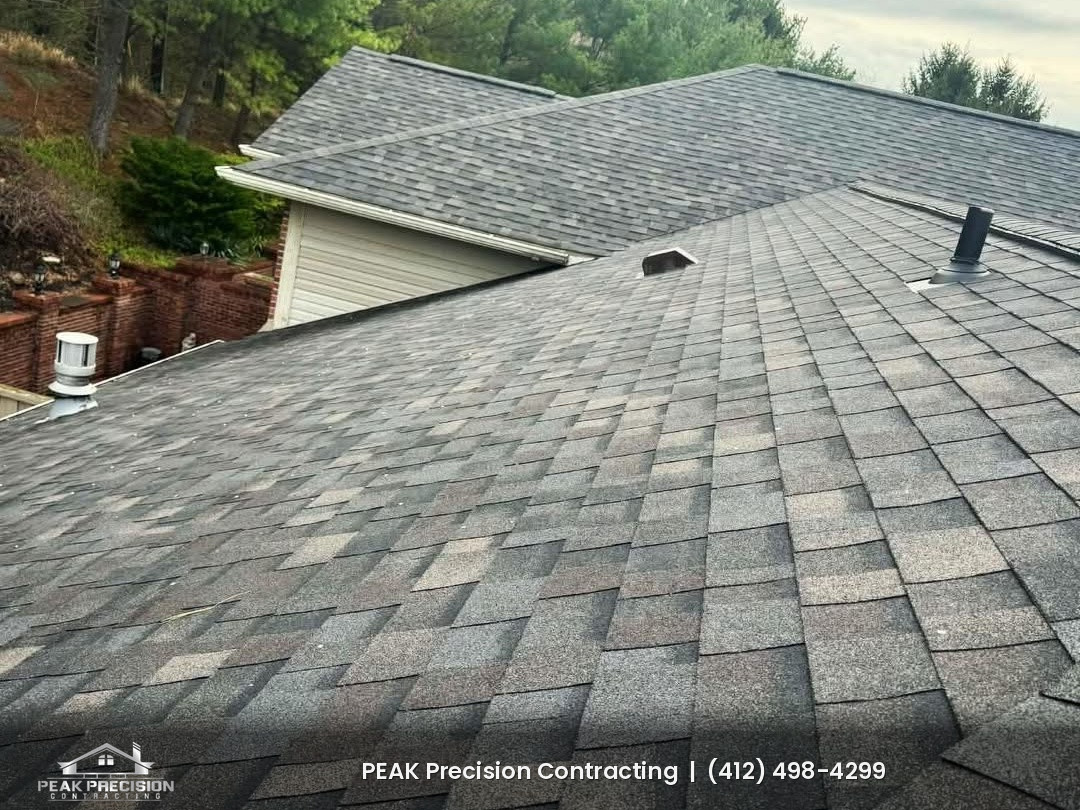
Safety first: a vent problem can be a carbon monoxide problem
Furnaces, boilers and gas water heaters vent exhaust that contains carbon monoxide. The U.S. Consumer Product Safety Commission (CPSC) recommends:
– CO alarms on every level of the home and outside sleeping areas, battery-operated or with battery backup, tested monthly
– A professional inspection of fuel-burning heating systems each year, including chimneys, flues and vents
– Clearing snow away from outside vents for fuel-burning appliances so CO does not build up in the house
– If a CO alarm sounds, getting everyone outside right away and calling 911
If you see rust flakes, scorch marks or water dripping onto the furnace or water heater itself, have a qualified heating technician check it before the holiday.
Leak type 1: water getting in from outside
Every pipe that passes through a roof needs flashing. The International Residential Code (IRC R903.2.1) requires flashing at wall and roof intersections, at changes in roof slope or direction and around roof openings. On a furnace or water heater vent, that usually means a metal flashing base under the shingles and a storm collar that sheds water away from the gap around the pipe.
Signs the water is coming from outside:
– The drip shows up during or right after rain, wind-driven rain or snowmelt
– The stain sits on the ceiling where the vent runs up, or on the attic sheathing around the pipe
– From the ground you can see a tilted storm collar, lifted shingles or cracked sealant at the base of the vent
It is the same flashing problem we trace on chimneys and in roof valleys.
Leak type 2: condensation inside the vent
Exhaust gas carries water vapor. When a vent does not draw well, that vapor condenses inside the flue and runs back down. InterNACHI notes that without proper draft, condensation can corrode a metal flue and damage a masonry chimney and its clay liner.
A common cause is an “orphaned” water heater. An Oak Ridge National Laboratory report explains it: a furnace and a gas water heater often share one chimney or vent. When the old furnace is replaced with a high-efficiency model that vents on its own, the water heater is left alone in a flue sized for both appliances. It may not produce enough draft, which can lead to condensation and, worse, exhaust spilling back into the basement. The U.S. Department of Energy’s Building America guideline on high-efficiency furnaces says the vent for any remaining appliance must be reviewed when the furnace is replaced, and that exterior masonry chimneys will require relining.
Signs the water is coming from inside:
– Drips on dry days, often on cold mornings when the heat has been running
– Rust streaks on the vent pipe or water around the water heater’s draft hood
– Crumbling mortar or staining at the base of a chimney that serves a gas appliance
– The problem started after a furnace replacement
Frost in the attic is a different moisture problem; our guide to attic ventilation and ridge vents covers it.
How we trace a leak around a vent
Roof leak detection is our specialty, and we trace the whole path, not just the stain.
– We start with timing: when it drips and whether the heat was running
– In the attic we check the decking, insulation and framing around the pipe with a moisture meter
– On the roof we inspect the flashing base, storm collar, boot and surrounding shingles
– We look for rust trails and condensation inside the vent connector and at the appliance
– Because our trades include HVAC as well as roofing, we can review the venting and the roof in one visit
What the repair usually involves
For an outside leak, the fix is usually new flashing and a sealed storm collar or boot, with any soft decking replaced. For condensation, the venting itself has to be corrected, for example with a properly sized liner or vent for the appliance, and that work should be done by a qualified heating professional to code. Either way, wet insulation gets replaced, the area dried and the ceiling repaired; see drywall repair after a leak, water mitigation and mold remediation if the water has been there a while.
What to do this week
– Test your CO alarms, and add one on any level that does not have one
– Put a pan under the drip and photograph the stain with the date
– Note whether it drips in dry, cold weather or only after rain or snowmelt
– Keep outdoor appliance vents clear of snow, leaves and holiday decorations
– If water is reaching the appliance, call a heating technician before running it hard for a house full of guests
– For an active leak during a storm, follow our emergency roof leak steps
Frequently asked questions
Why does my vent only leak when the heat is on?
Drips that track with the furnace or water heater running, especially in dry weather, point to condensation inside the vent rather than rain getting in. That usually means the venting needs to be checked by a qualified professional.
Can I just add caulk around the vent pipe?
Sealant can buy time, but it does not replace a proper flashing base and storm collar, and it does nothing for condensation.
Do you work outside Canonsburg?
Yes. We work throughout Canonsburg, Cecil, North Strabane, Peters Township, South Fayette, Bridgeville, Upper St. Clair, Bethel Park, Mt. Lebanon and the South Hills.
Roof leak detection and repair in Canonsburg
Water around a furnace or water heater vent? Call Peak Precision Contracting at (412) 498-4299, day or night, or request a no-obligation estimate. We are a general contractor covering interior and exterior renovations, roofing, siding, gutters, storm and insurance claims, water mitigation and mold remediation, and an Owens Corning Platinum Preferred contractor. Since 2016 we have worked from 938 South Central Ave in Canonsburg, where you can visit our showroom by appointment, pick out samples and take them home. Our work is backed by up to 25-year craftsmanship guarantees, separate from the up to 50-year limited lifetime manufacturer warranty on roofing through Owens Corning (see our warranty page), and we won’t leave your doorstep until you’re satisfied. PA HIC Registration #PA132469
Sources
– U.S. Consumer Product Safety Commission, Carbon Monoxide Fact Sheet
– CPSC, winter carbon monoxide and fire safety tips
– 2021 International Residential Code, Chapter 9, Section R903.2.1
– InterNACHI, Orphaned Water Heaters
– Oak Ridge National Laboratory, Condensing Furnace Venting, Part 1
– U.S. Department of Energy, Building America Measure Guideline: High-Efficiency Natural Gas Furnaces